Lighting hotel lobbies and halls: balancing aesthetics, functionality, and identity
A hotel hall is far more than just a passageway: it is the first point of contact, where guests form their initial impressions of hospitality, style, and attention to detail.
In modern hospitality, a distinction is made between lobby and hall: a lobby is spacious, typical of large hotels or chains, often with a lounge, bar, or café area; a hall is cozier, as in boutique hotels, with a reception desk and a few carefully arranged seating areas.
In both cases, lighting acts as a narrative element that communicates the brand’s identity, guides the eye, and highlights architectural features. Every choice, from the type of fixture to the color temperature, contributes to creating a welcoming, elegant, and functional environment.
How to choose the right lights for the lobby
The choice of lighting depends on both the function of the space and its architectural characteristics. In a setting that combines aesthetics and functionality, the most effective approach is to create multiple layers of light, combining different types of fixtures, each with a specific role, to achieve a balanced and harmonious overall effect.
Recessed or track spotlights: the foundation of general lighting
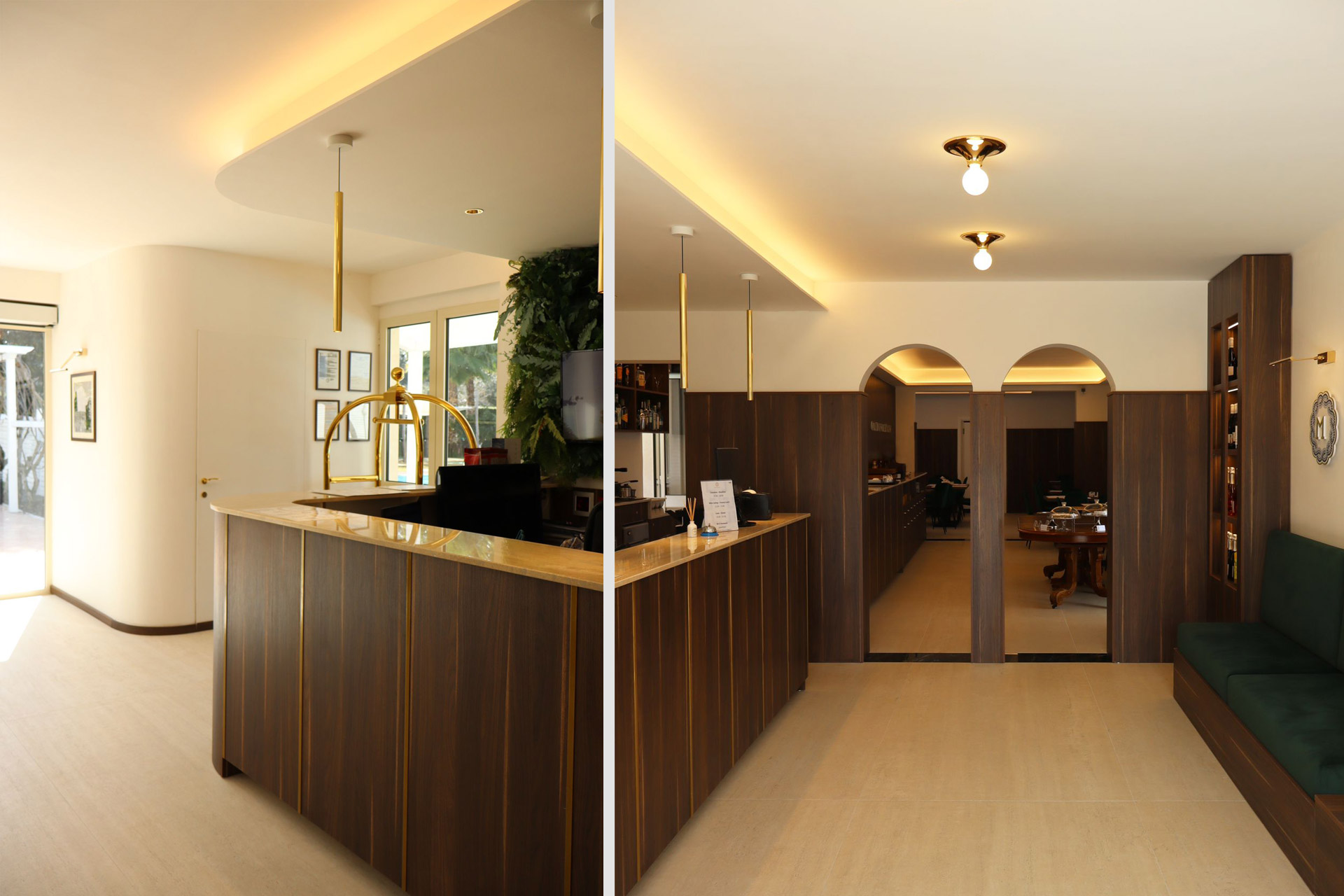
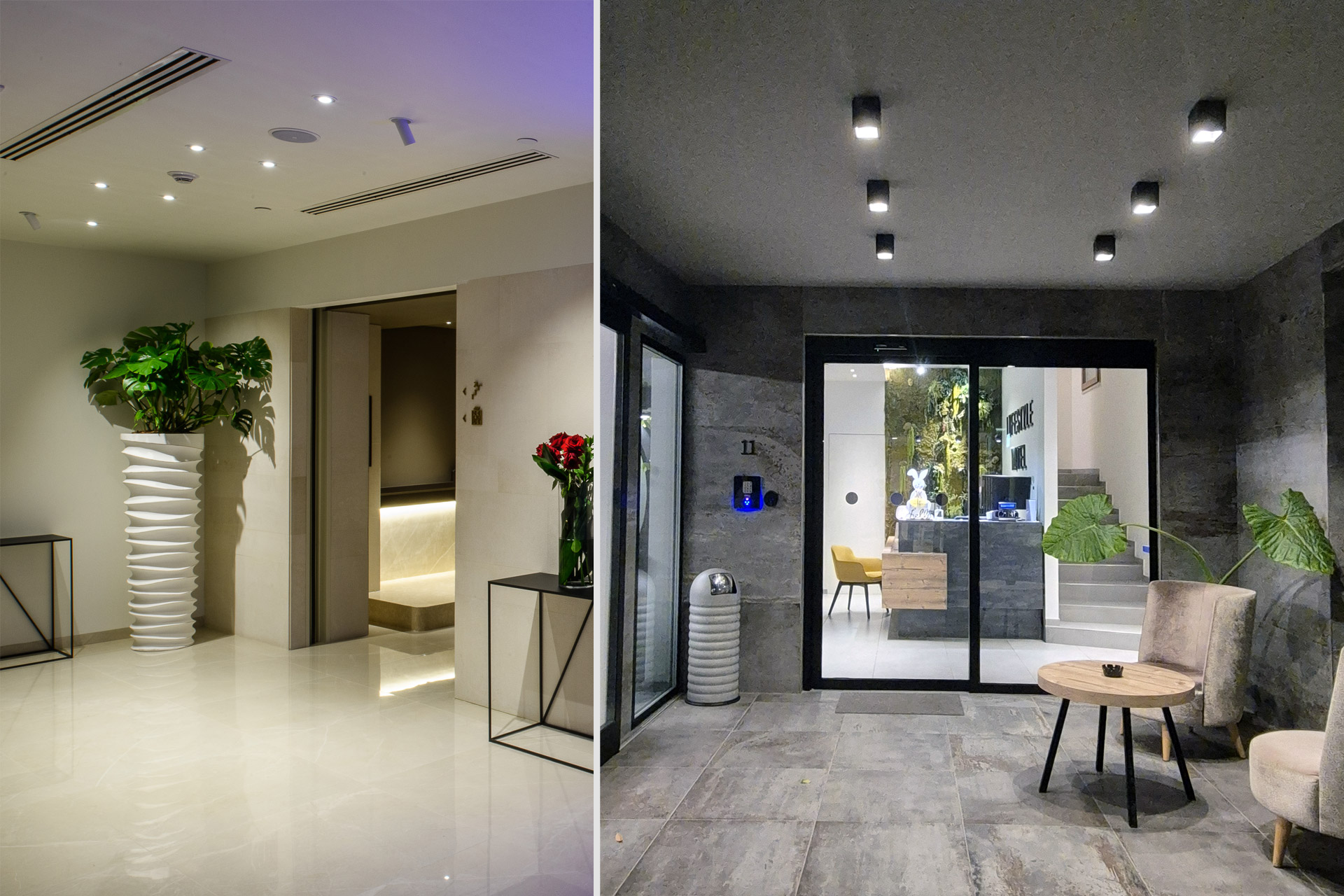
Spotlights serve as the base for general illumination, ensuring uniform light and making the space easily navigable, highlighting paths, waiting areas, and circulation zones. Their versatility comes from adjustable optics: wide beams provide proper illumination in passageways, while narrow spots accentuate architectural details or decorative elements such as artworks and luxury materials. Technically, fixtures with UGR < 19 reduce glare and ensure visual comfort in representative spaces like the hall.
Suspension lights: style and drama
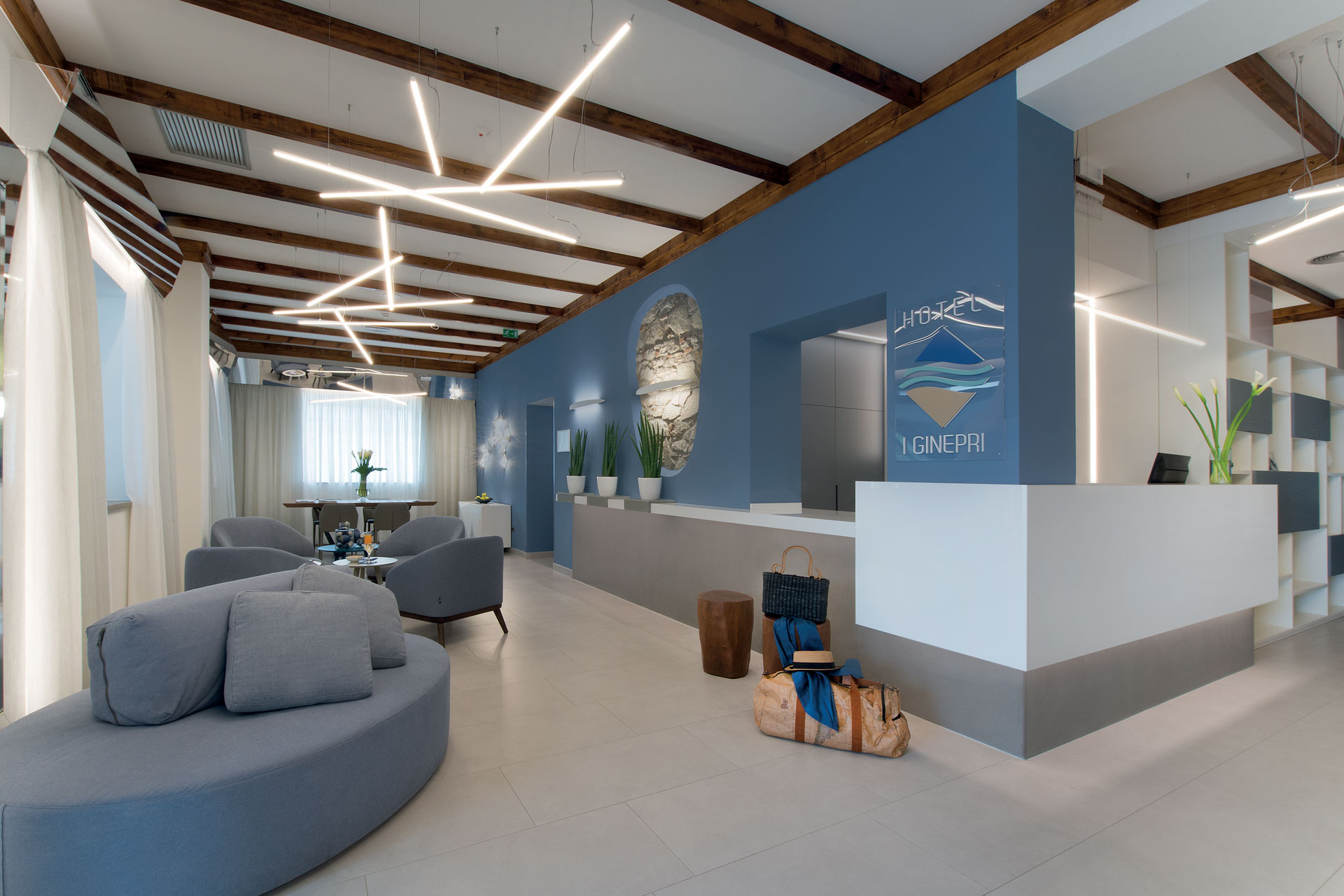
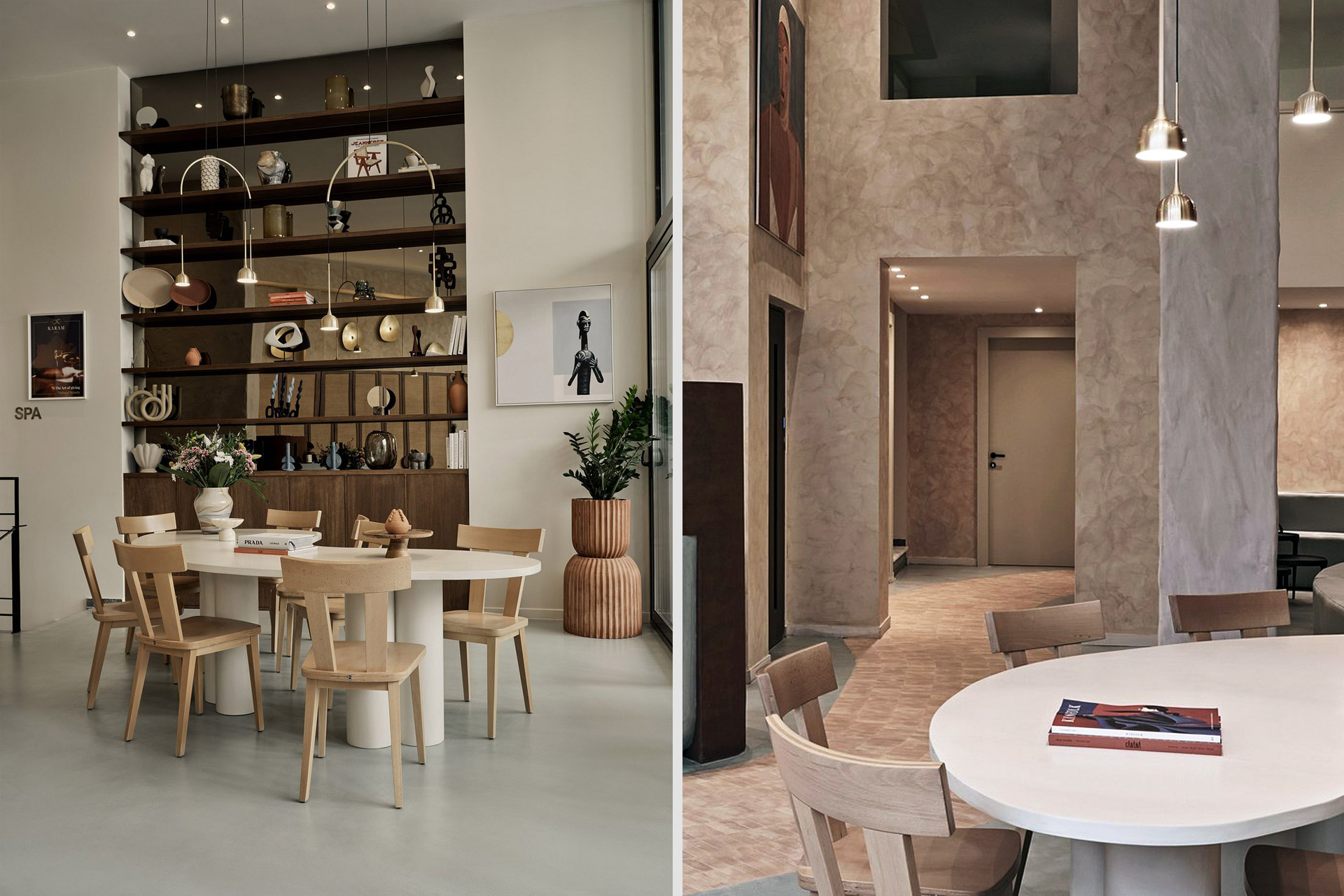
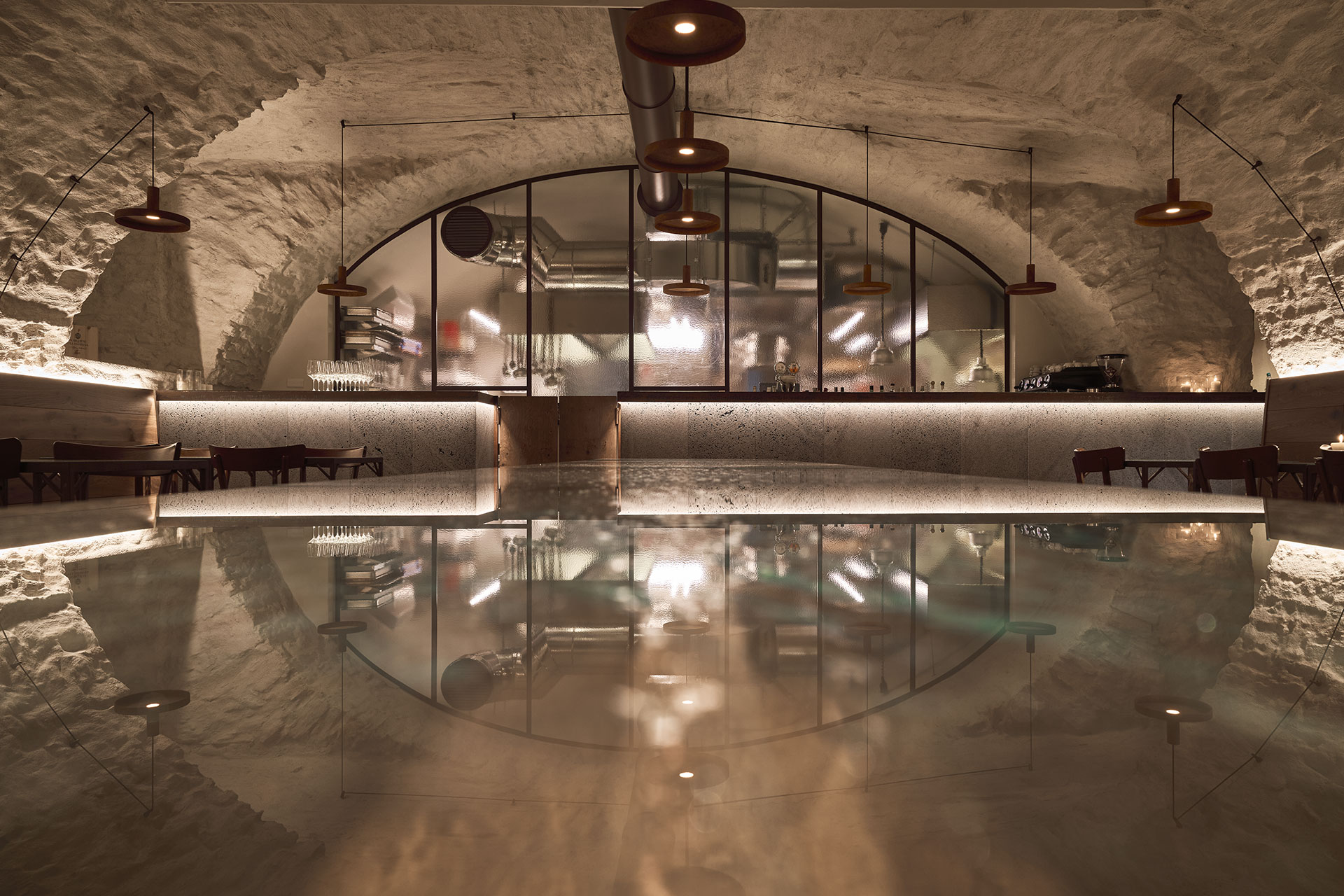
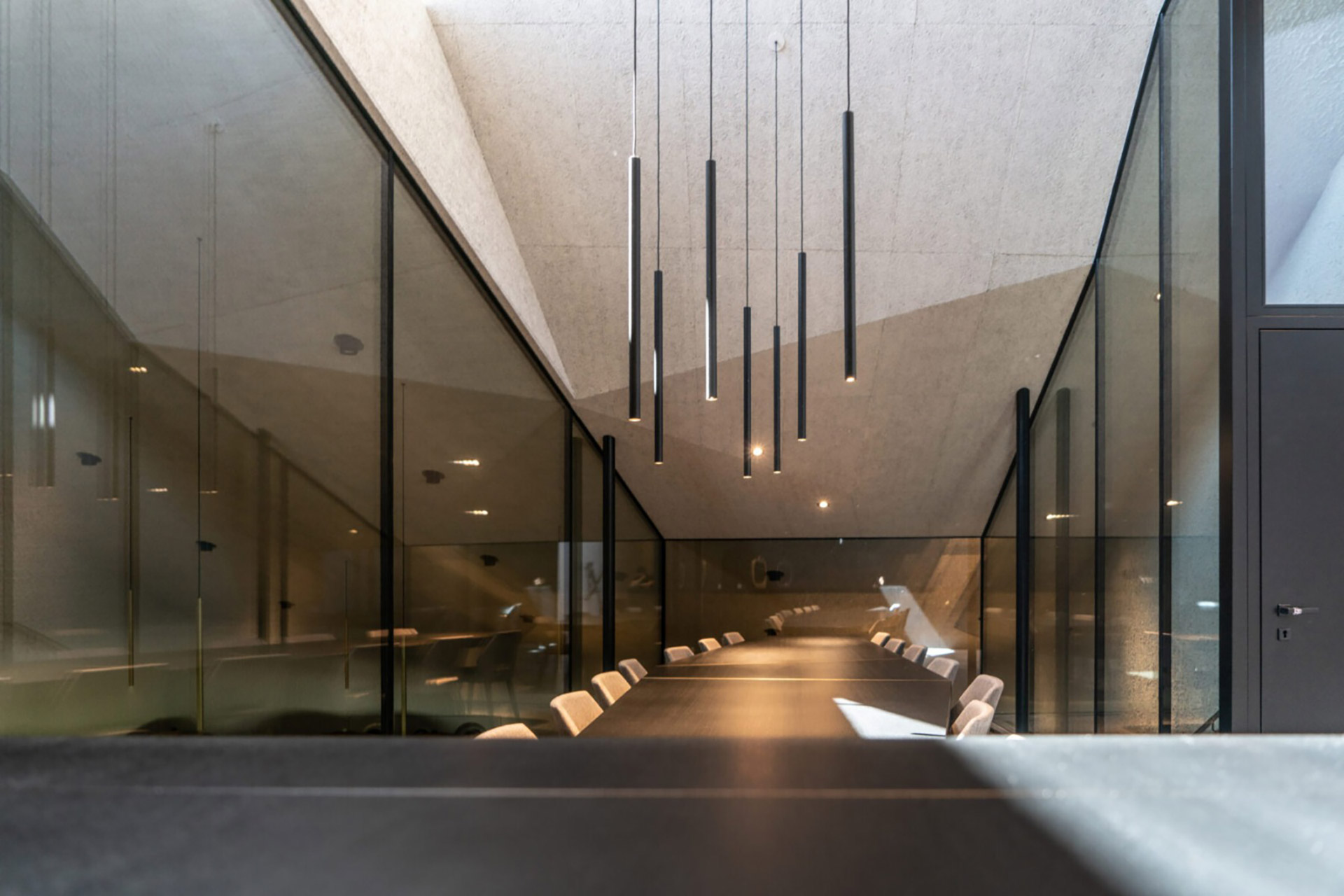
Suspension lights often become the focal point of the hall, giving character and identity to the space. Placed above the reception or in the center of the room, they guide the gaze and create a visual hierarchy. From a design perspective, it is essential to consider height and proportions: oversized or poorly positioned fixtures can compress the space or distort perception, while well-proportioned models enhance geometry and enrich the visual experience.
Floor lamps: comfort and atmosphere
Floor lamps, although more discreet, can be strategically placed to create intimate corners in lounge areas or next to seating. Adjustable models allow light intensity or height to be modified according to the time of day, offering customizable lighting scenarios without compromising general illumination.
Wall lights and sconces: shaping vertical surfaces
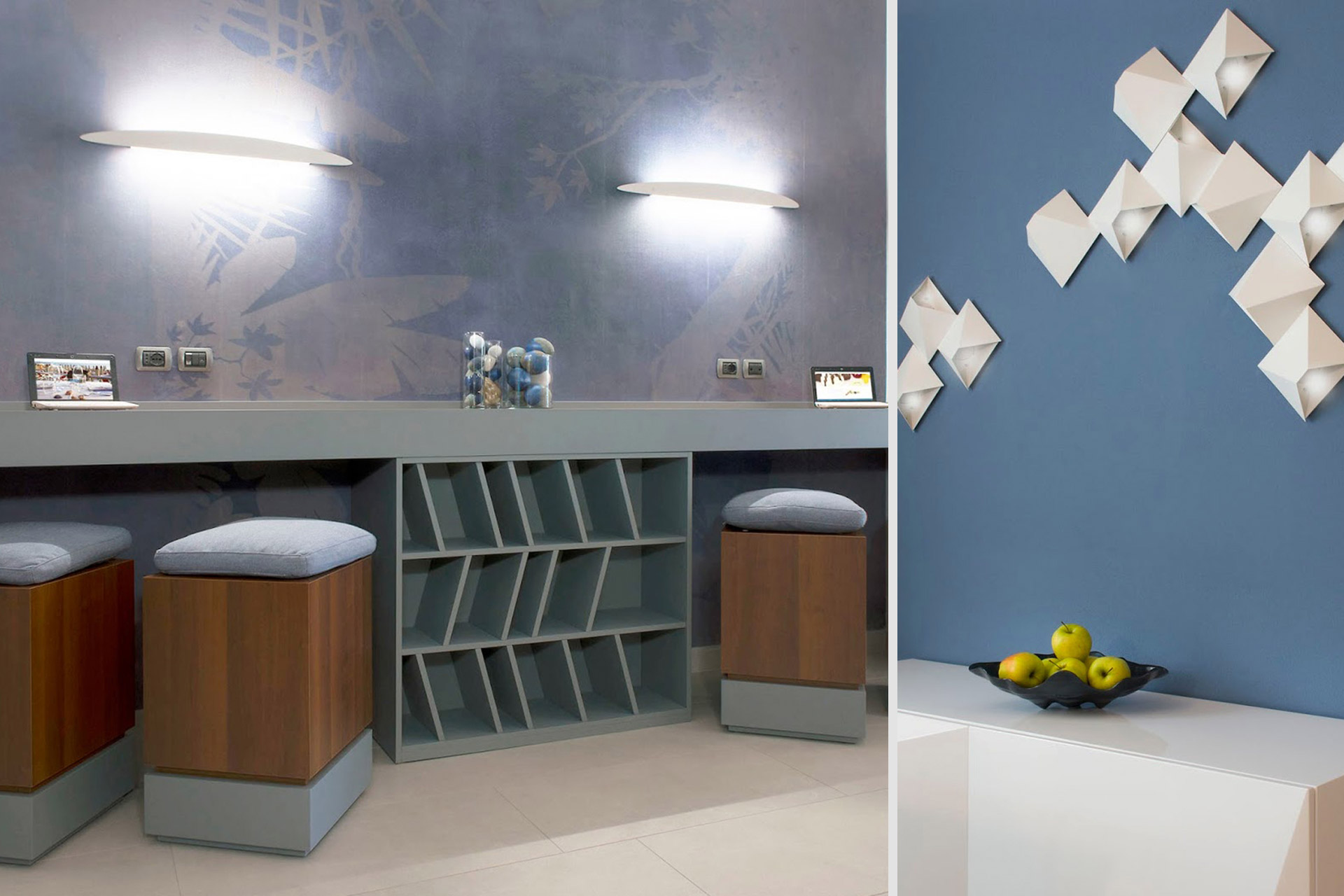
Wall lights and sconces complement and shape vertical surfaces while serving as decorative elements, distributing light along corridors and walls, eliminating shadows, and highlighting materials and finishes. Careful planning of direct and indirect light restores depth, emphasizes textures and colors without glare, and contributes to a refined overall perception of the hall.
Light color
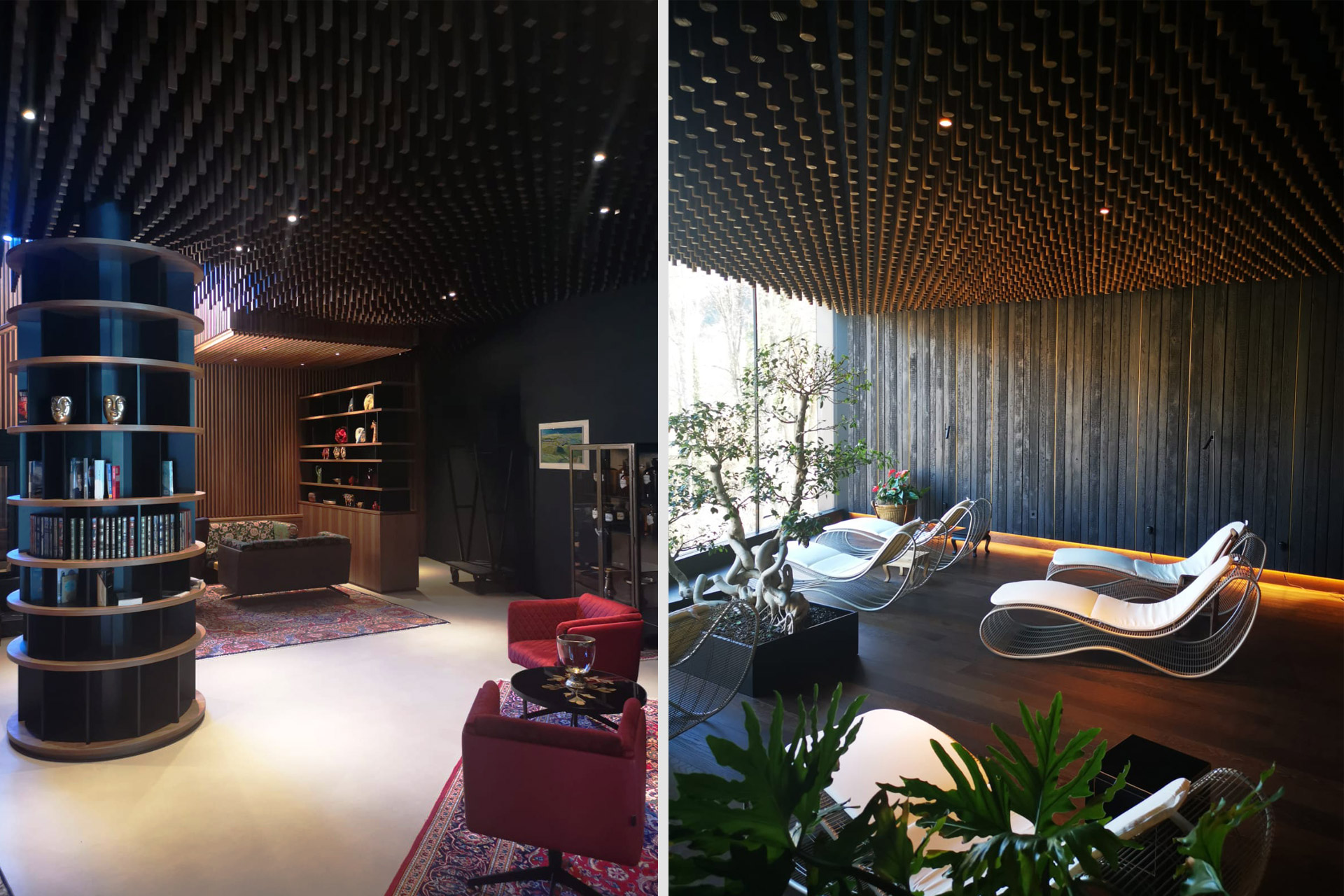
Color temperature defines atmosphere and spatial perception in the hall. It is essential to balance warmth and professionalism while reflecting the brand’s style and identity.
Warm light around 2700–3000K is ideal for lounge areas, creating comfort and a sense of well-being, while neutral tones between 3700–4000K suit reception and operational spaces, conveying professionalism and elegance. Cold light above 4000K is discouraged, as it can make the environment impersonal and unwelcoming.
To highlight premium materials and finishes, choose light sources with a CRI ≥ 90, ensuring faithful color rendering and detail accuracy.
Technical advice
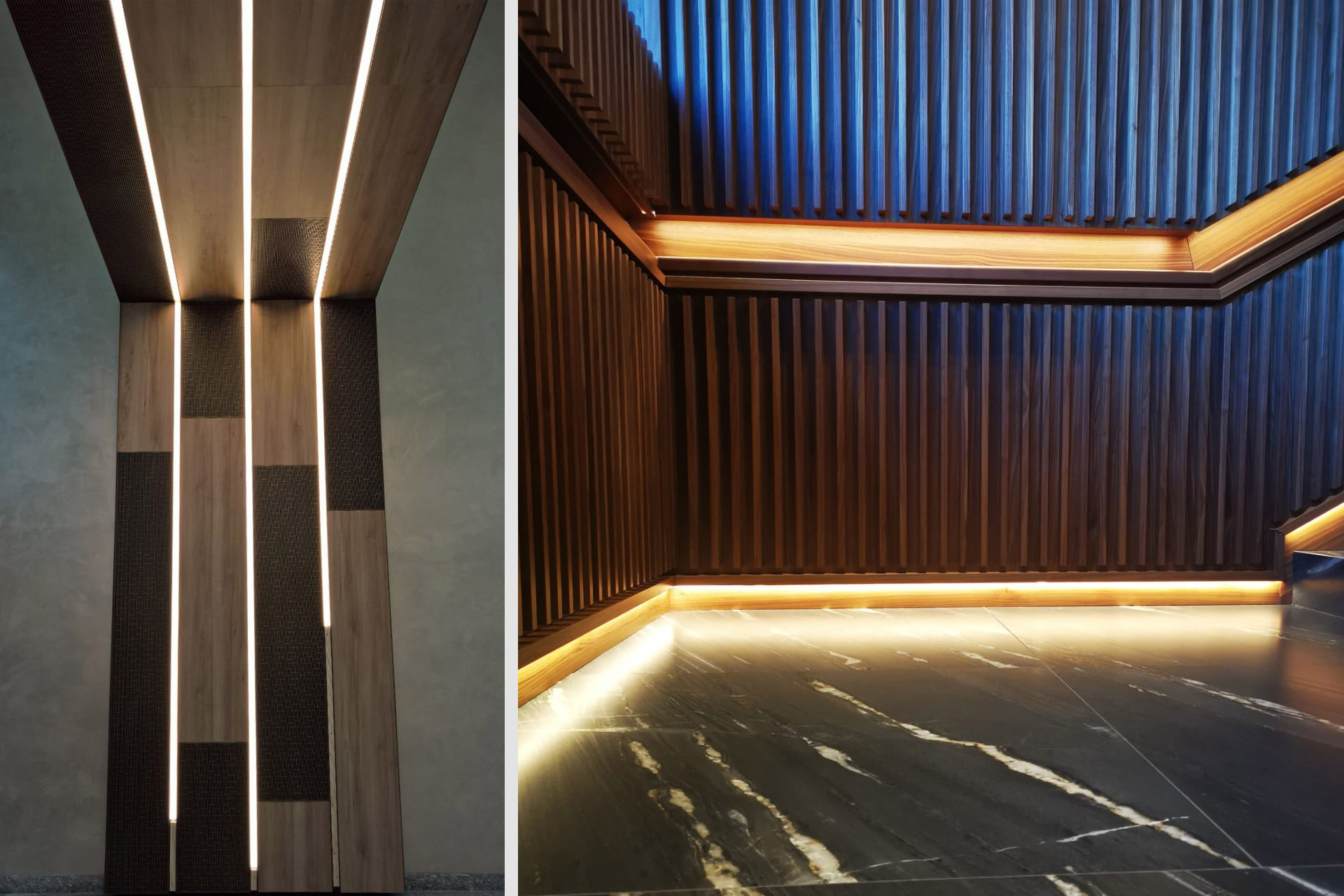
Effective hall lighting requires more than selecting the right fixtures; direct and indirect lighting must be combined—for example, spotlights and suspension lights working with integrated LED strips—to create depth and model the space.
Light should enhance surfaces and materials, emphasizing texture and color without flattening perception. Special attention should be paid to visual comfort and fixture placement: spotlights must be angled correctly and, if necessary, fitted with diffusers or anti-glare optics. Dimmable systems allow light to be adjusted to different times of day, creating a lively, welcoming environment in the morning and a soft, relaxing atmosphere in the evening.
Custom solutions
Architectural features can sometimes complicate traditional fixture installation. Low ceilings, structural constraints, or bespoke design requirements call for custom solutions developed in close collaboration between designers and the Egoluce technical team.
Custom solutions maintain aesthetic unity and consistent lighting even in complex contexts, ensuring optimal performance and compositional freedom. Cable installations are an alternative to suspension lights, offering visual lightness and precise illumination in low-ceiling spaces. Each fixture can be customized in RAL finish, length, shape, and construction details to integrate perfectly with architecture and materials.
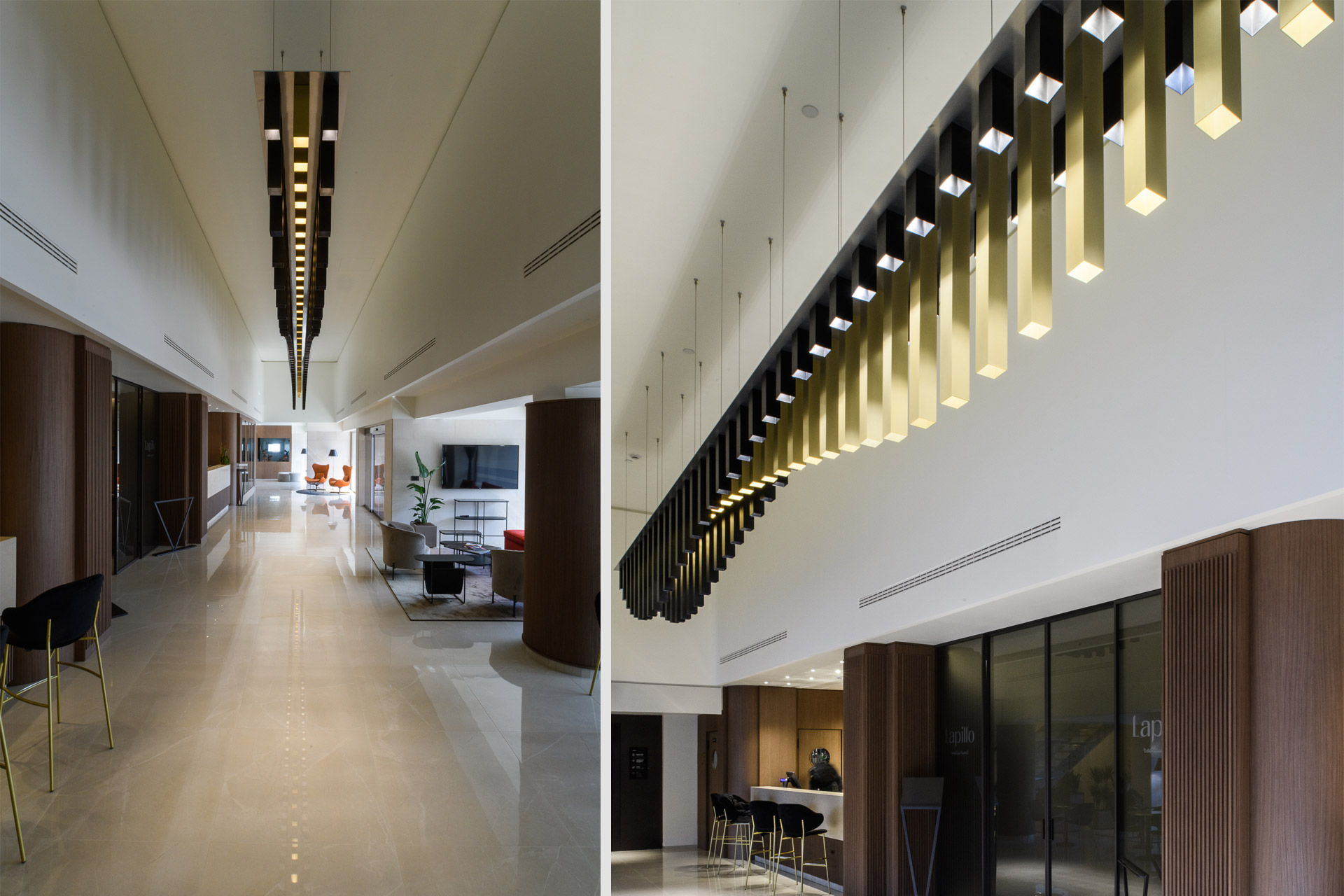
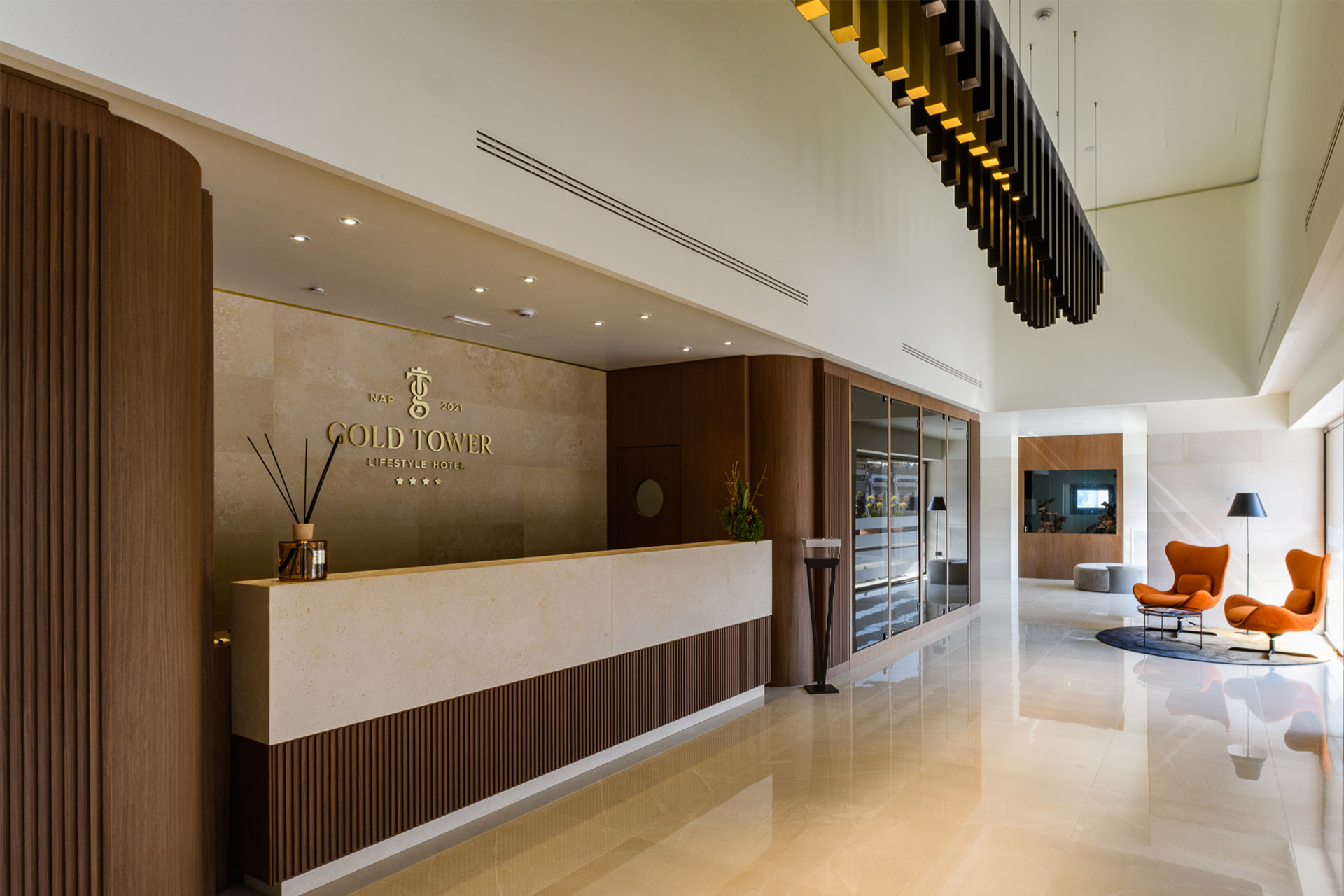
A notable example is the Gold Tower Hotel lobby in Naples. In collaboration with architect Antonio Brancaccio, the “Gold Wave” composition was created: a double wave of light formed by Egokube lamps of varying lengths on three parallel lines. The fluid form breaks the linearity of the space and enhances perception, while black and gold leaf finishes complement the hotel’s concept, adding elegance and visual depth.
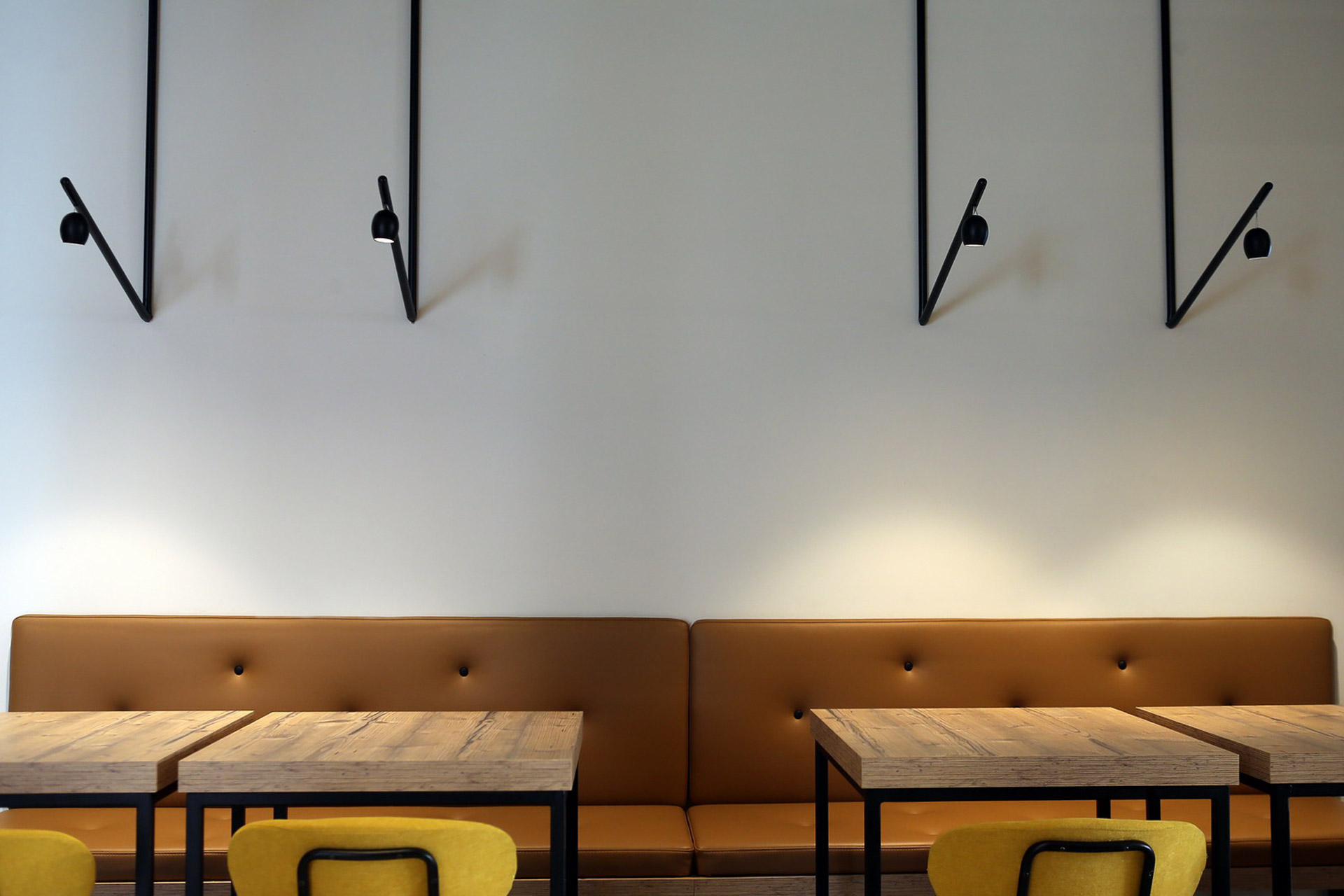
At the Meg Lifestyle Hotel restaurant in Riccione, designed by architect Eleonora Denicolò, the Mork suspension lights were completely reimagined: instead of hanging from the ceiling, they are anchored to an L-shaped metal profile fixed to the wall, creating an architectural suspension effect and clearly defining the table area. This bespoke intervention demonstrates how light can adapt to design, enhancing space identity.
Every custom Egoluce project arises from a dialogue between creativity, technology, and architectural vision, offering unique solutions fully integrated with the environment.
Lighting hotel lobbies and halls operates on functional, aesthetic, and perceptive levels. The goal is to create welcoming spaces consistent with the hotel’s identity, using fixtures, color temperature, and dynamic lighting scenarios. A well-designed project guides the eye, enhances materials and architecture, and improves the guest experience.