In the work of Lorenzo Guzzini, matter is never a mere surface finish. It becomes a narrative structure and an atmospheric device, determining how light settles within the space.
When the request for the restaurant 10 Nodi was to “bring the sea inside,” the response was not illustrative. The intention was not to represent, but to evoke.
The sea could not enter as an image, but it could be perceived as vibration, reflection, and sensory memory.
From this premise, a project takes shape in which surfaces and light operate in continuity, constructing an interior landscape that suggests water, piers, and rock without ever explicitly depicting them.
Matter as memory
The first layer of the project is material.
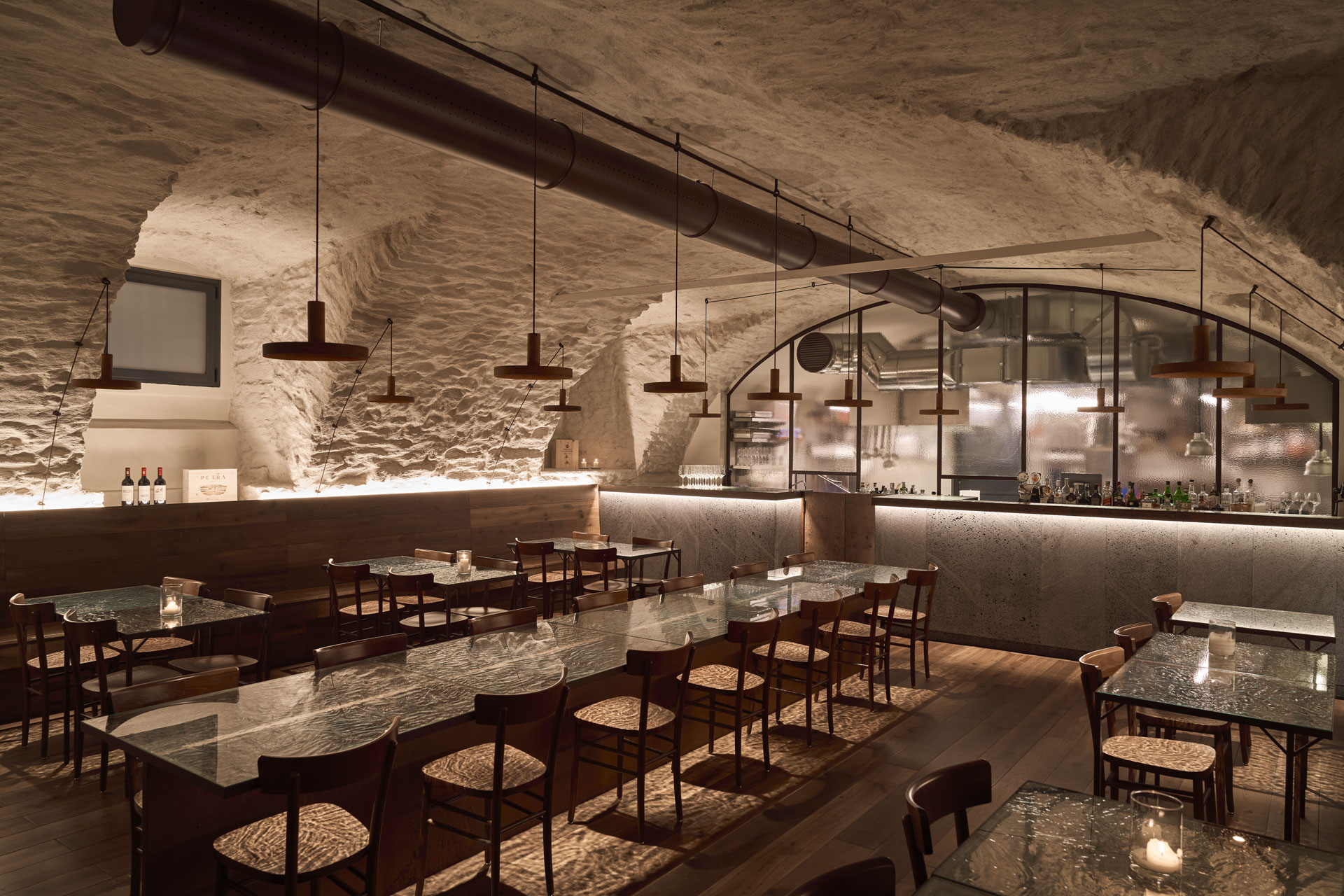
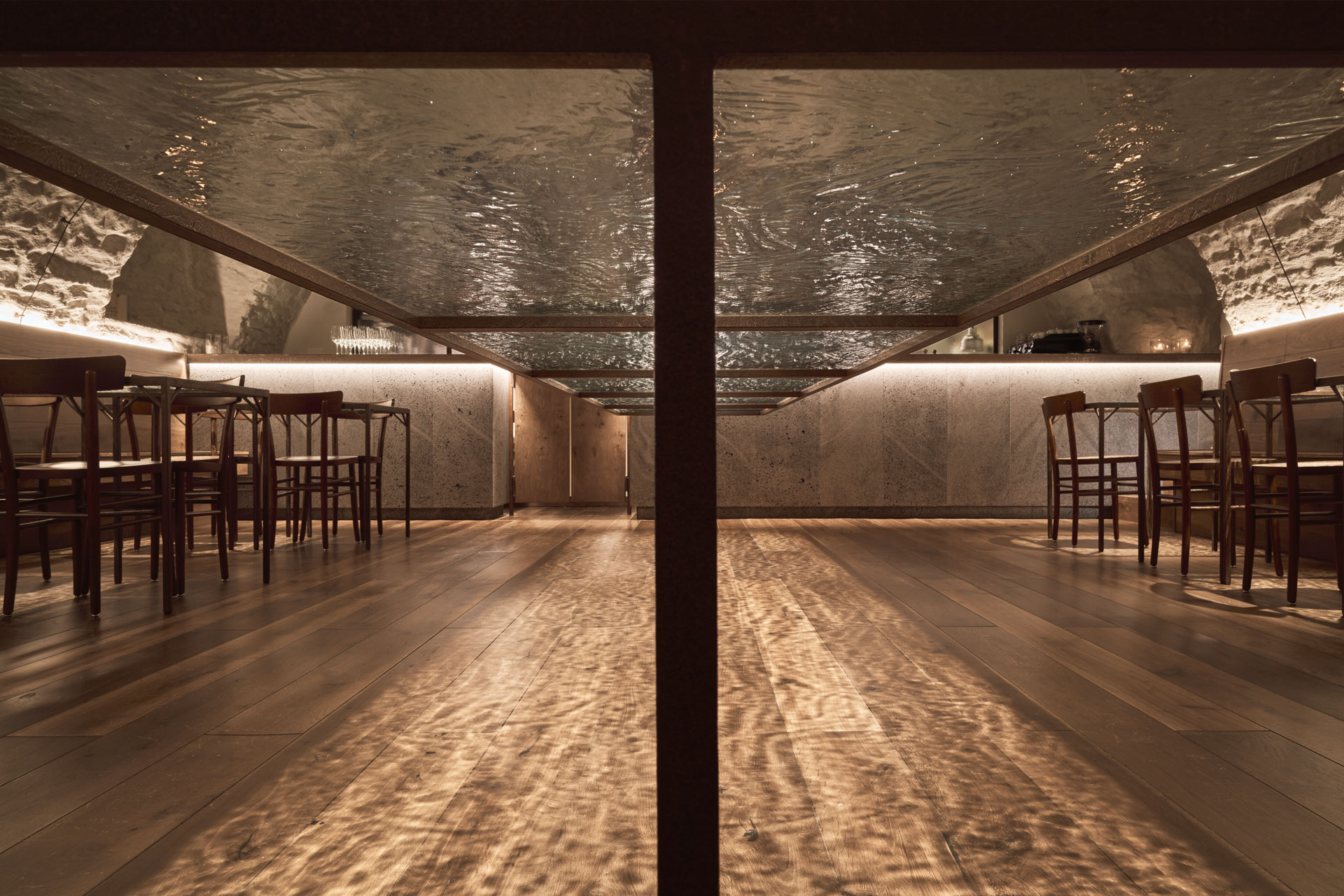
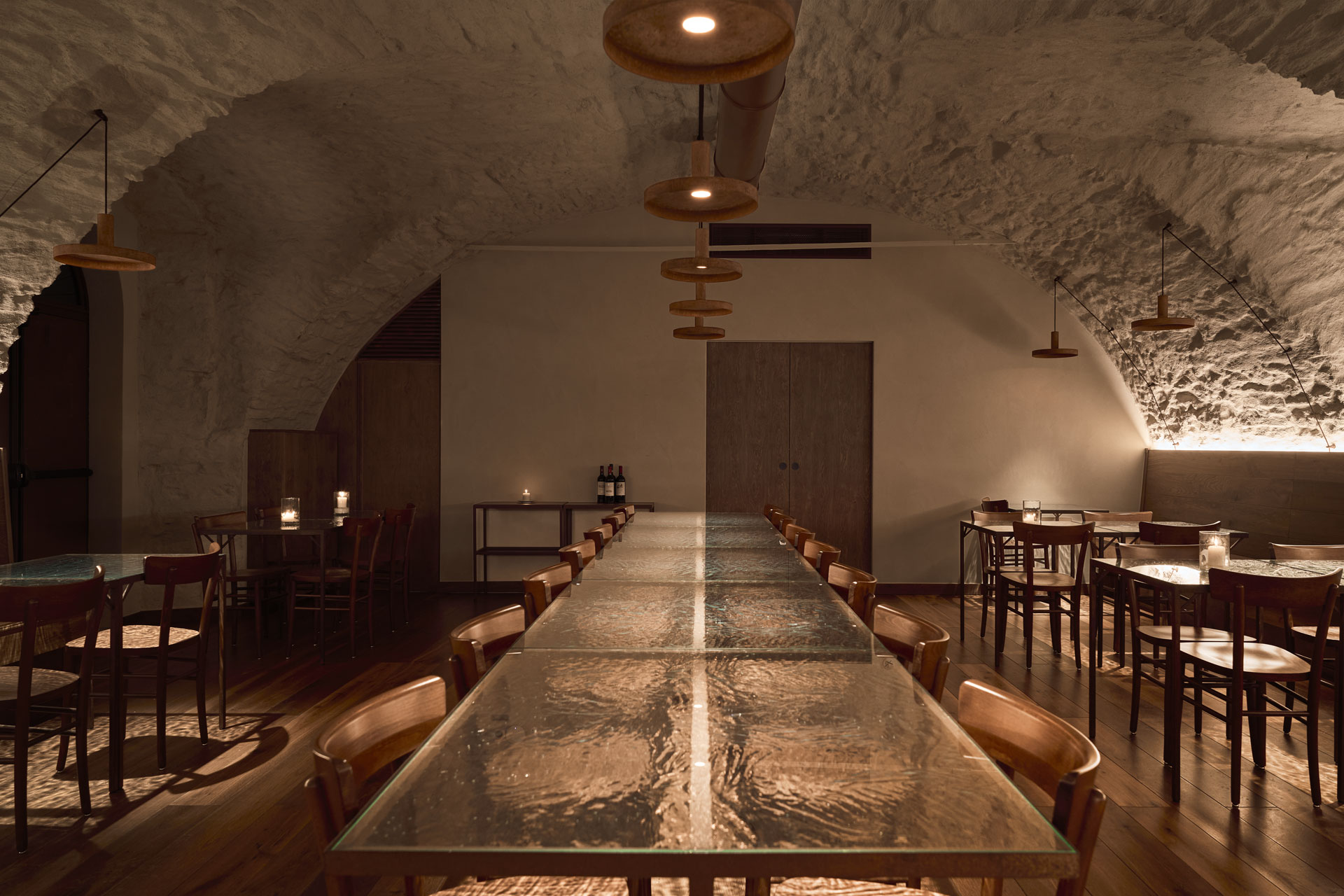
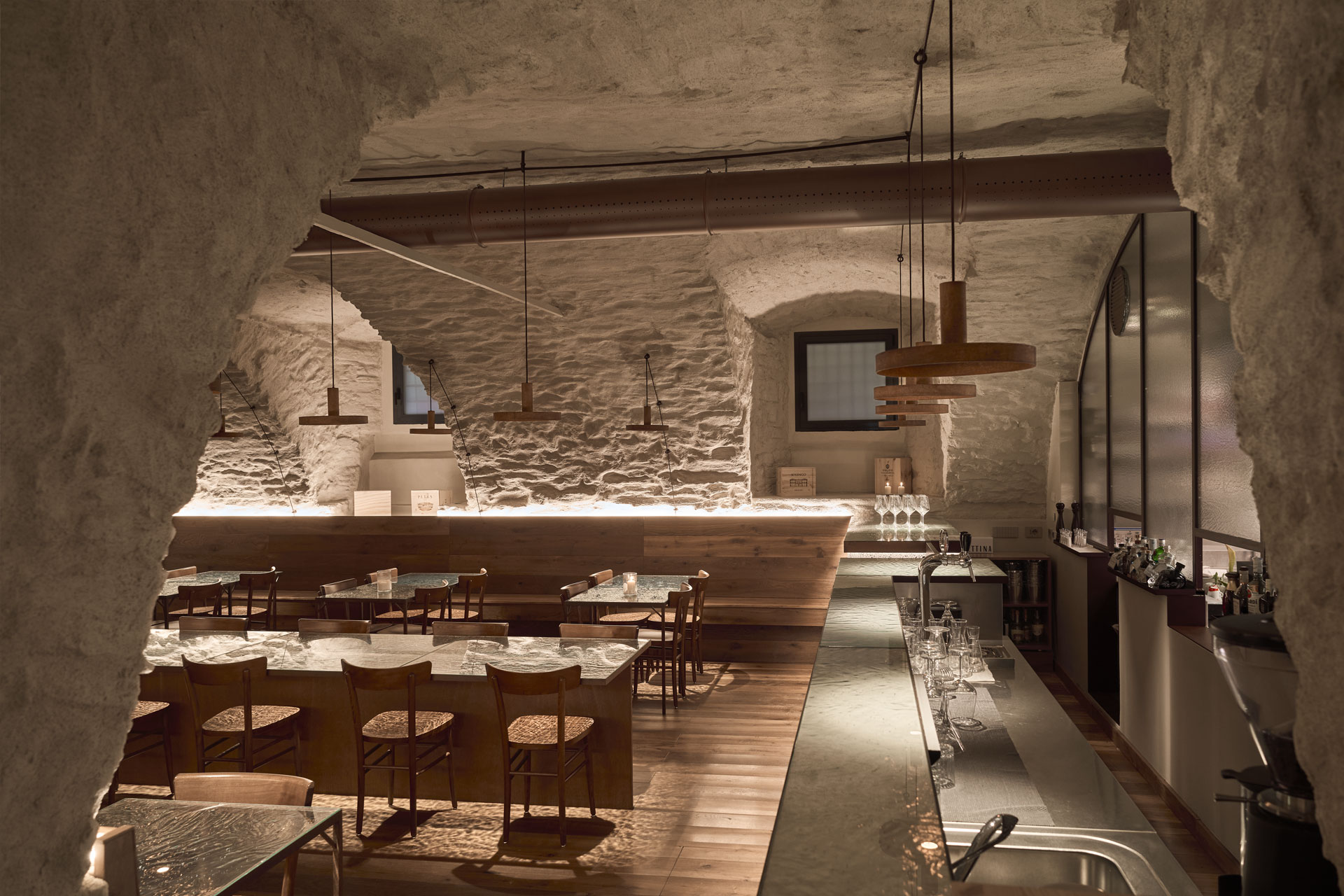
The floor, made of nailed wooden planks, recalls a pier not only in form but also in sound: the creaking becomes part of the experience, as if the space were suspended above water.
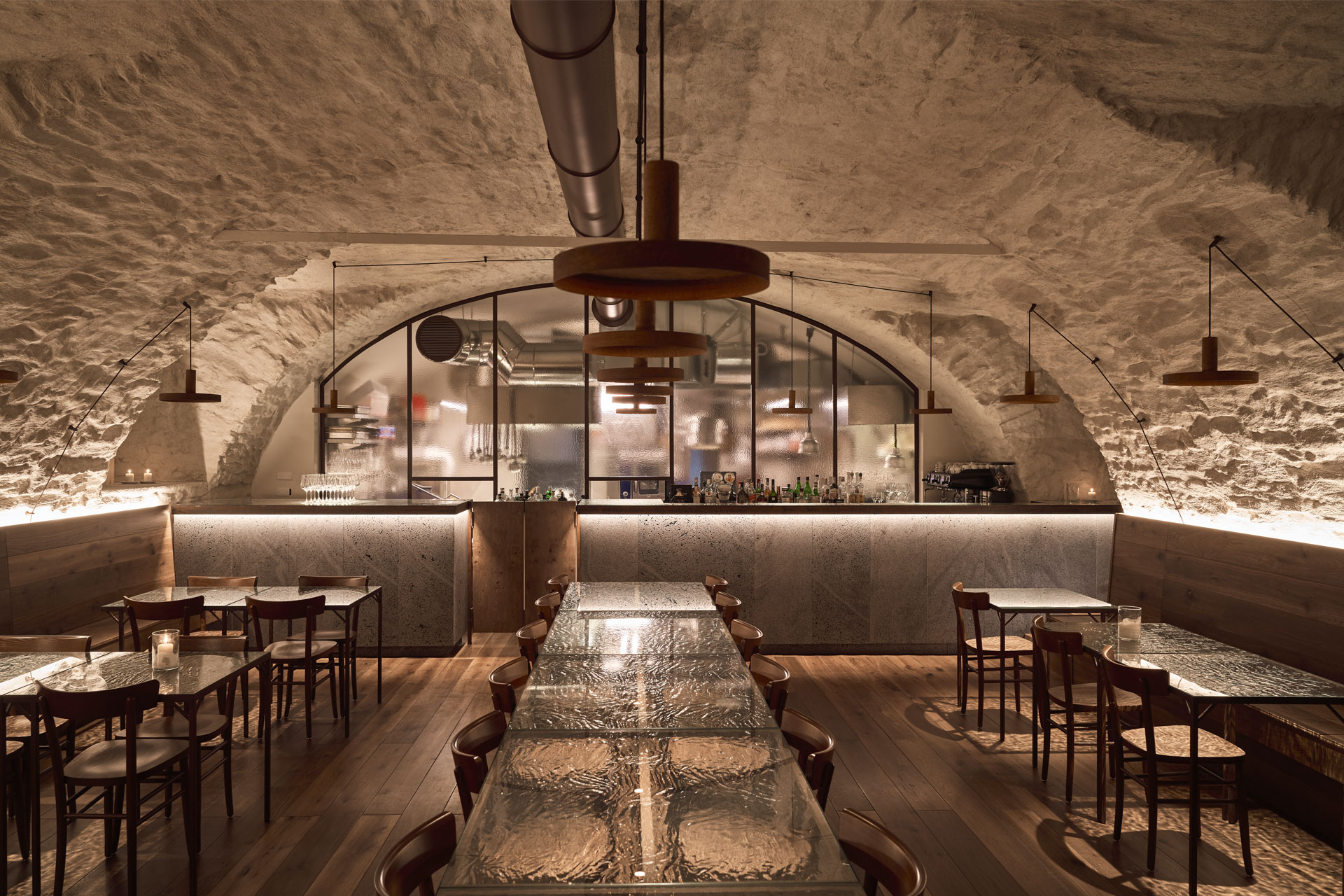
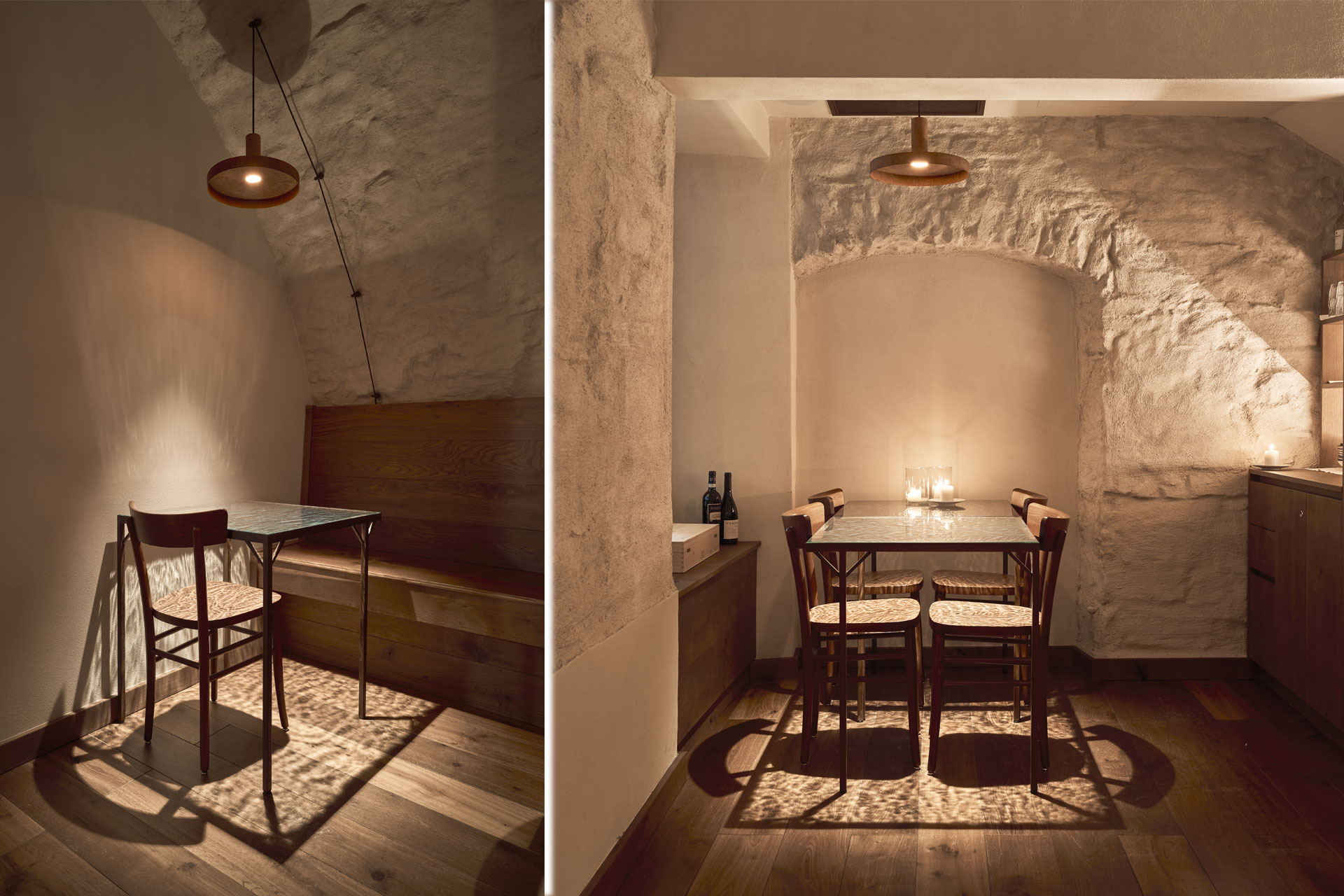
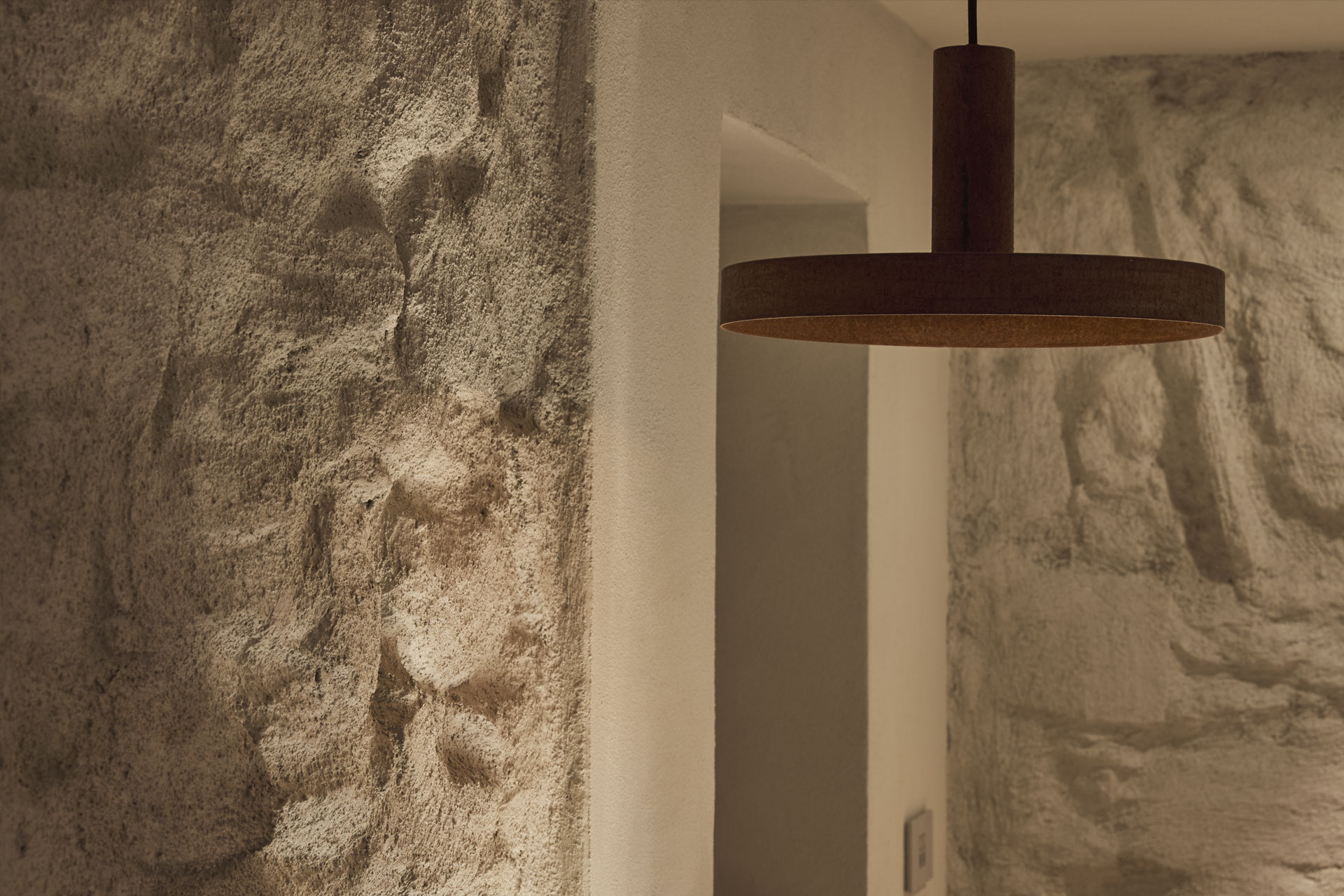
The walls, conceived as a cave, introduce a primordial dimension. A carved, irregular surface, later calibrated and softened through warm tones such as beige, rust, and natural shades that provide depth without weighing down the environment.
Here, matter does not merely decorate, it creates atmosphere.
Glass as a liquid surface
The most radical gesture stems from the intention to translate water into an optical phenomenon.
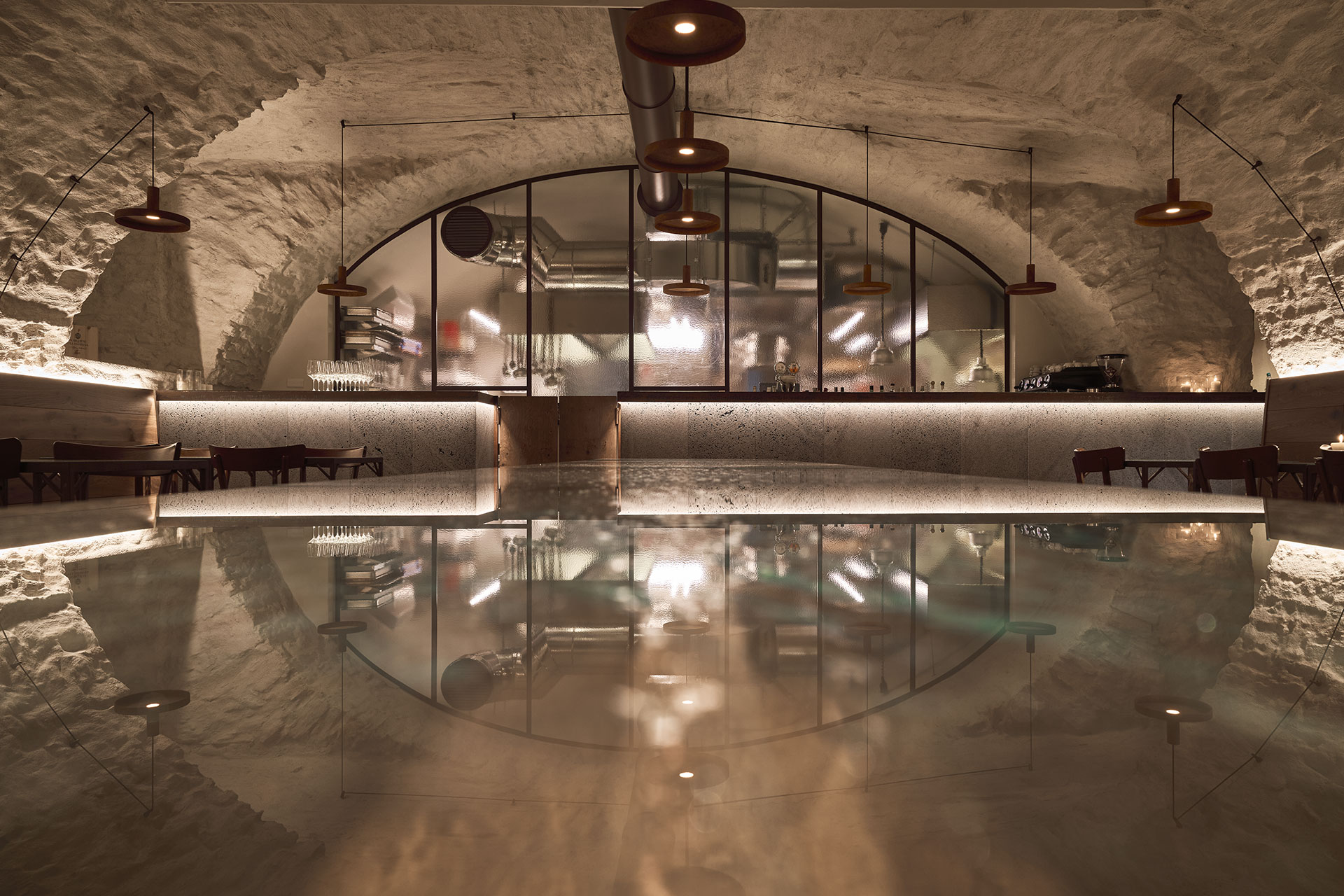
The artistic glass tables are treated as liquid surfaces. Light passes through them, interacts with the texture, and reflects onto the floor, generating luminous effects reminiscent of moving water.
This effect is not accidental. It results from precise lighting calibration. The sources were positioned and calibrated as in a photographic system: at closer distances the image softens, while at greater distances it becomes more defined.
Distance and height were carefully studied to avoid blur and control projection sharpness.
The table becomes a lens, and light turns into a tool for focusing the atmosphere of the space.
Light as a consequence of matter
In this project, light is not a final aesthetic choice, but a consequence of the materials.
The selected temperature, 2700K, aligns with the warm tonal palette of the space. The principle is simple: warm light accompanies warm tones, while cool light complements cooler ones. Light is not chosen at the end based on taste; it develops alongside the materials.
For accent lighting, fixtures such as Newton Special were used in a dedicated version that dialogues with the project’s materials and finishes. Here, optical precision is essential: beam control, calibrated height, and glare-free emission.
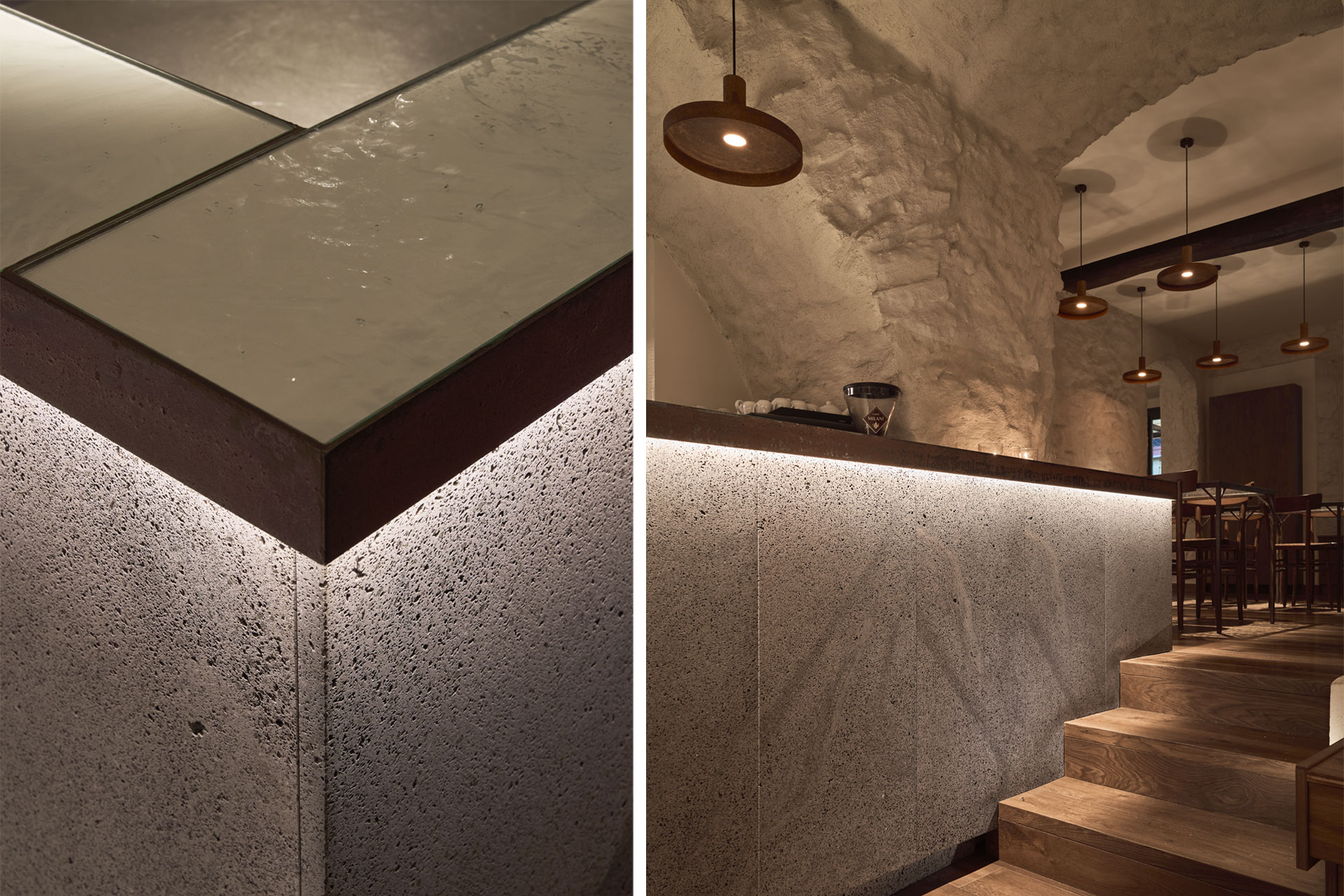
At the same time, linear systems such as Wanda were integrated into the luminous coves running along the counter and seating areas, illuminating stone surfaces and vaults. The light flows across the walls, defines volumes, and enhances materiality without ever becoming visually intrusive.
Light thus becomes a constructive element that amplifies the perception of spatial depth.
Even the finish of the luminaires directly affects the final result. A rust finish, for instance, enhances the warm component of the emission, increasing chromatic perception and making the environment more enveloping. In this sense, the finish becomes an integral part of the lighting system, where technical precision directly shapes the perceptual quality of the space.
Atmosphere as a project
10 Nodi is not a themed restaurant. It is a space that suggests through reflections, surfaces, and luminous vibrations.
Matter and light are not separate elements, but parts of a single design system. Atmosphere emerges as a rigorous construction, where every design decision contributes to a coherent and immersive experience.
This is how light and matter become space.
PHOTOGRAPHY: Serkan Emre Erçakır