When designing a gym, lighting is a key aspect that can significantly influence users’ experience. Adequate lighting not only creates a welcoming environment but also improves safety and helps increase motivation and performance during training.
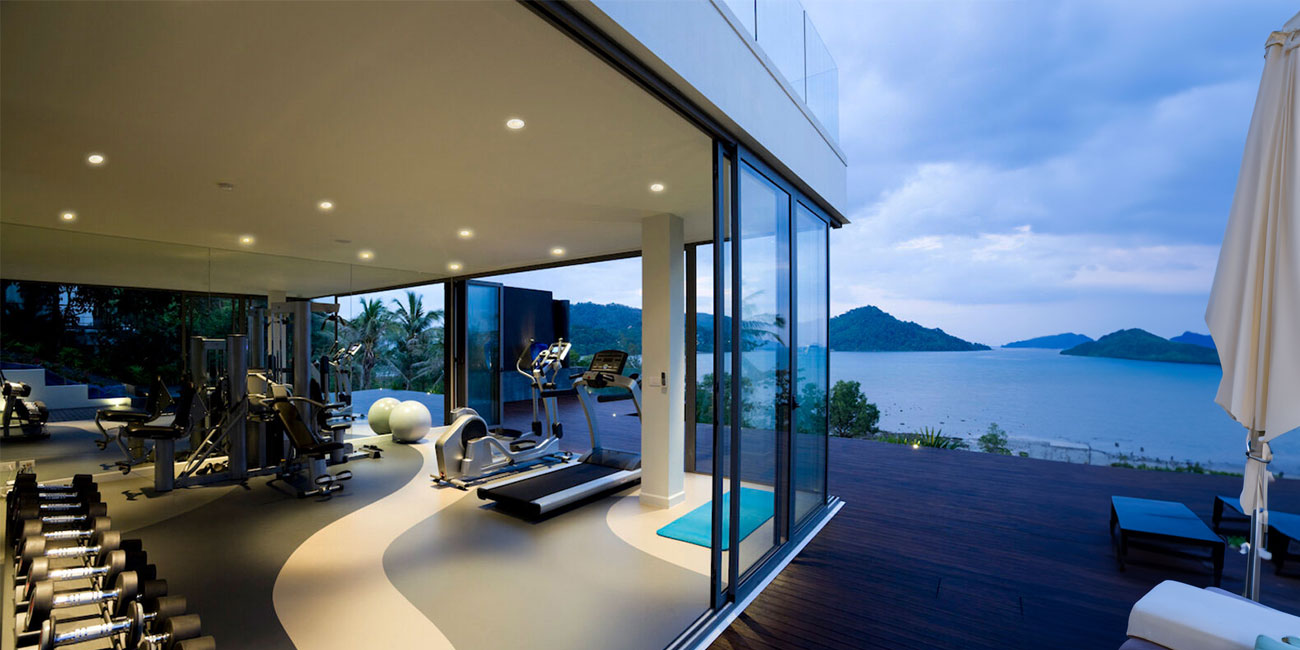
In addition to natural light coming in through windows and skylights during the day, it is also essential to provide a combination of even artificial light that does not strain the eyes and ensures adequate visual comfort, thus improving mood and concentration.
Proper artificial lighting for the gymnasium can be achieved by using several lighting points to illuminate the entire training area from above diffusely, imitating natural light and reducing shadows. The lights should be positioned and aligned high on the ceiling to avoid glare and annoying reflections. If the gym consists of several areas, it is advisable to subdivide the lighting according to the specific needs of each area.
Cardio area
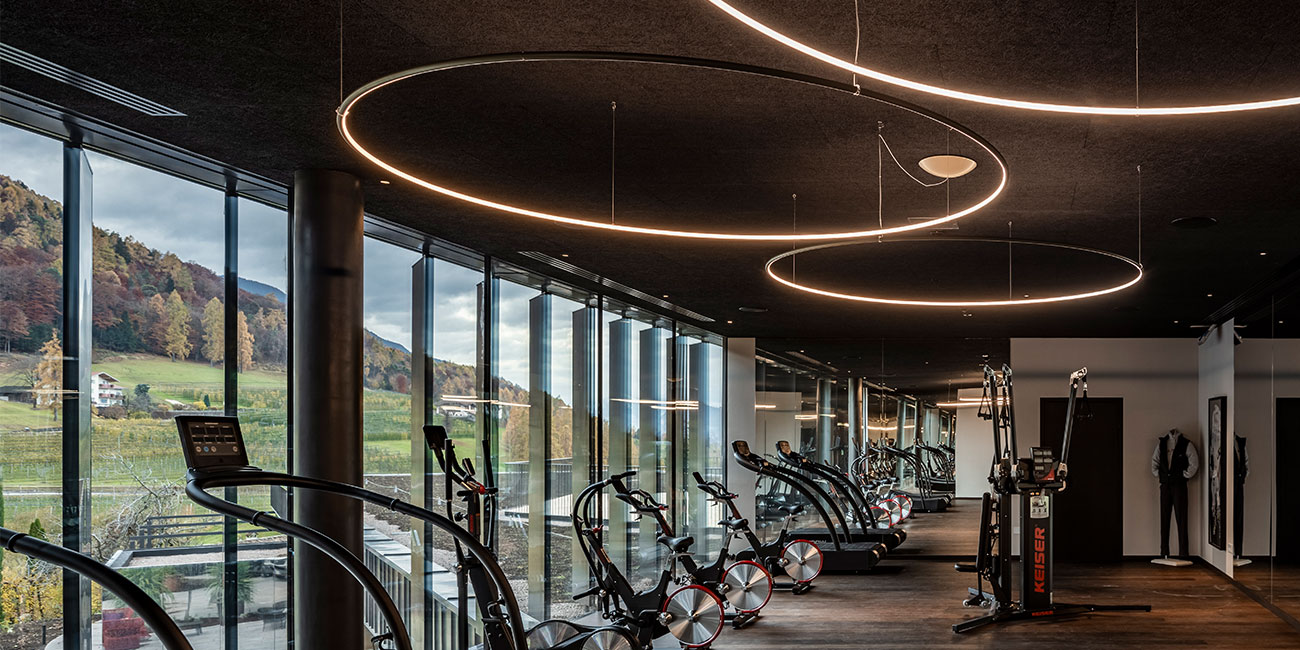
For this environment, it is essential to ensure bright, even lighting that does not strain the eyes. The best solutions include LED light panels, spotlights and ceiling lights.
Pendant lamps are an alternative solution to effectively illuminate the space and create a dramatic effect. The recommended color temperature is 4000K to keep motivation high and improve visibility.
Weight room
Having powerful, directional light is crucial in this area. Adjustable LED spotlights with a color temperature of about 5000K are the ideal solution to adequately and safely illuminate the training area, highlighting muscle definition and providing immediate visual feedback to users.
Spaces for group lessons
Lighting in these areas should be versatile. Dimmable lights create the right atmosphere for different activities, from relaxing yoga classes to more intense aerobics classes. In these environments, it is recommended to use a color temperature between 3500K and 5000K to suit different activities and create an engaging environment.
Lighting is a key element in the design of a gymnasium. Choosing the type of light, its intensity, and color can improve user safety, motivation, and performance. Investing in a well-designed and flexible lighting system can make all the difference in creating an optimal and welcoming workout environment.