A professional lighting design process begins with the space itself, not the luminaire. This article outlines the methodology behind effective lighting design: from spatial and architectural analysis to photometric calculation, layout development and on-site execution.
Space Before Illumination
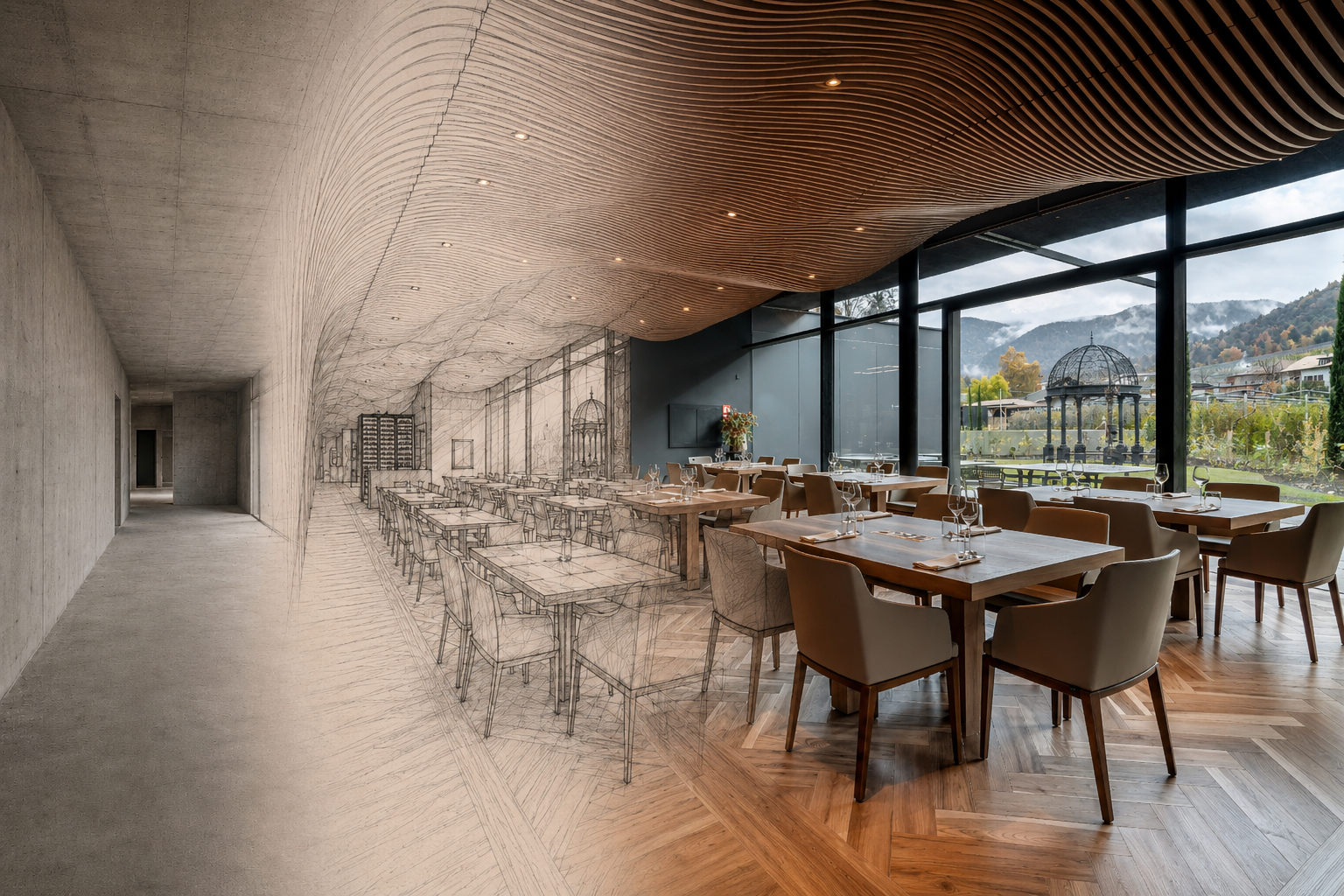
Every lighting project begins before light is defined. Not with luminaires, optics or performance data, but with observation and interpretation. The space is read in its architectural form, its intended use and its perceptual conditions.
Whether on site or through architectural drawings, plans and sections, the first step is to understand proportions, spatial relationships and visual tensions. Shadow zones, uncontrolled contrasts, dominant surfaces and compressed environments are not problems to fix later. They are signals to interpret from the start. At this stage, light is not yet a solution. It is a variable that will be shaped in response to the space itself.
Spatial Geometry and Materials
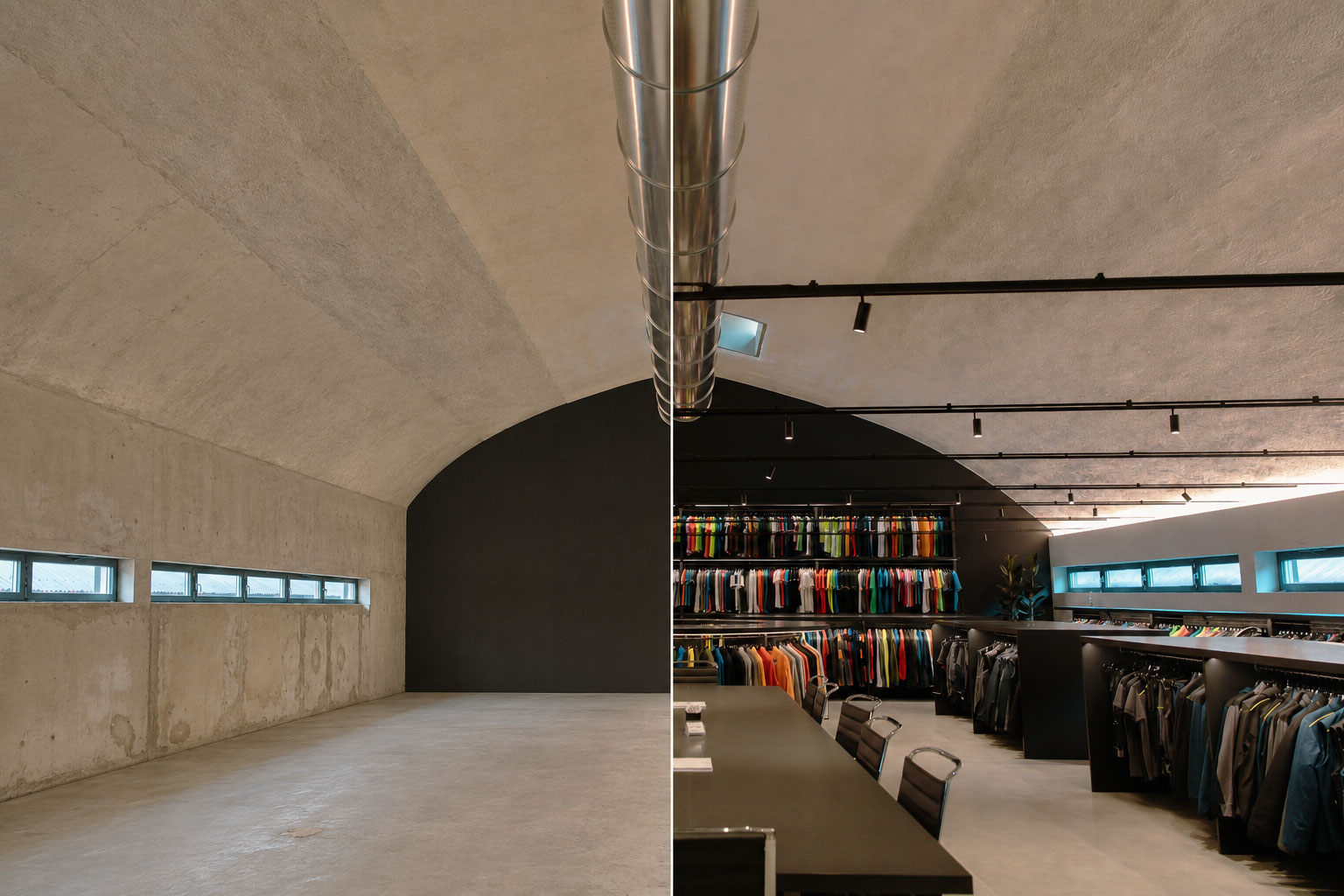
The initial observation evolves into a technical reading of the spatial structure. Geometry, ceiling heights, depth and architectural discontinuities directly influence how light will behave and how it should be distributed. A space developed along a linear axis requires a different lighting strategy compared to a compact layout or a double-height volume.
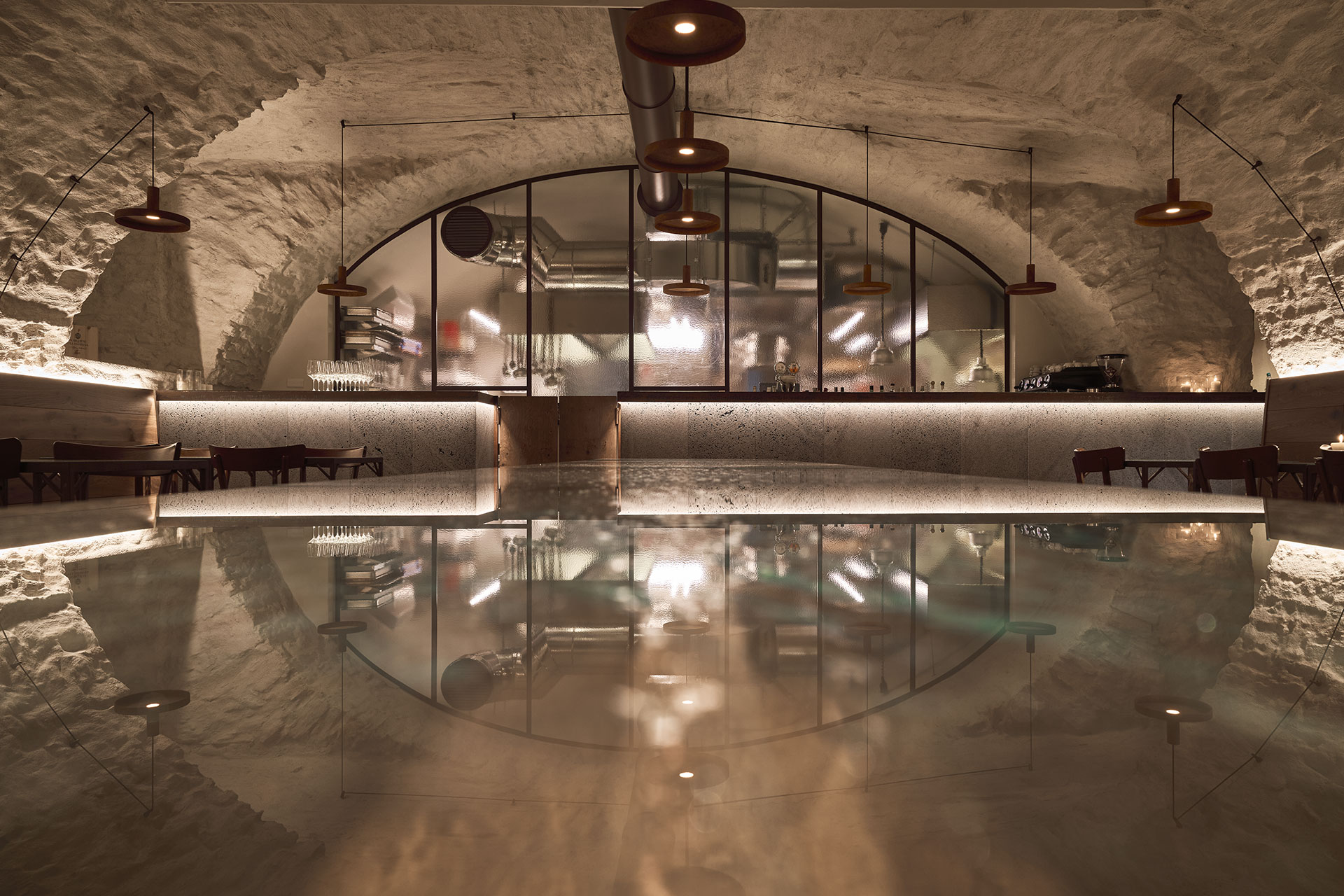
Materiality plays an equally critical role. Finishes, textures and reflectance values determine how light is absorbed, reflected or diffused. Light does not simply illuminate surfaces. It interacts with them, shaping depth, contrast and the overall perception of space.
Lighting Performance Criteria
Once the spatial structure is understood, the project shifts towards use. Activities, duration of occupancy and required visual comfort define the lighting criteria. Illuminance levels, uniformity, glare control, colour temperature and colour rendering are calibrated to ensure clarity, balance and perceptual coherence. Light becomes a performance-driven system, designed to support the space without interfering with its architectural language.
Daylight as a Design Variable
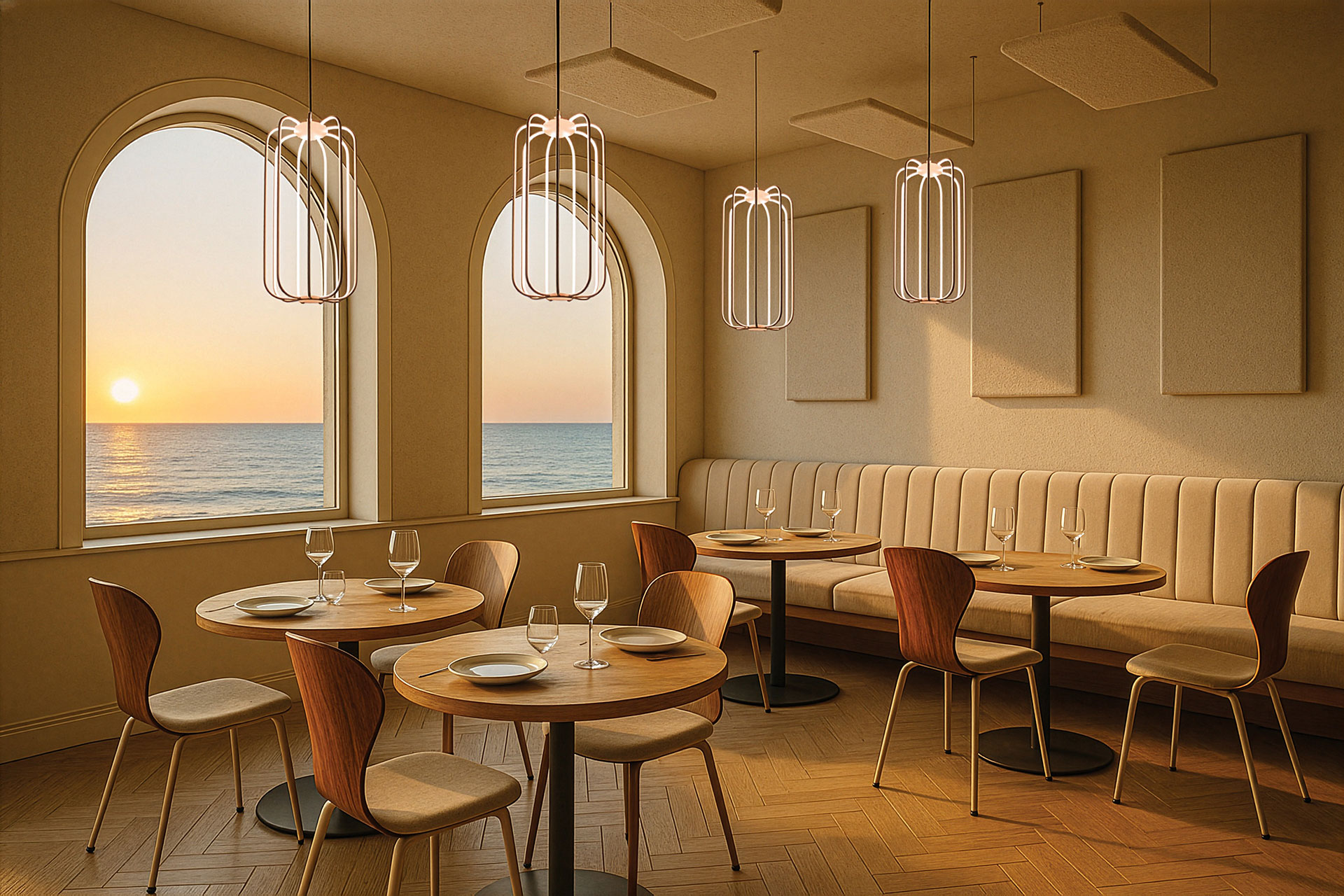
Daylight is treated as an active component within the strategy. Orientation, glazing dimensions and aperture sizes, and spatial depth influence luminance distribution and visual balance throughout the day. Daylight also affects psychological well-being and circadian rhythm, with a direct impact on alertness, rest and the overall perception of space.
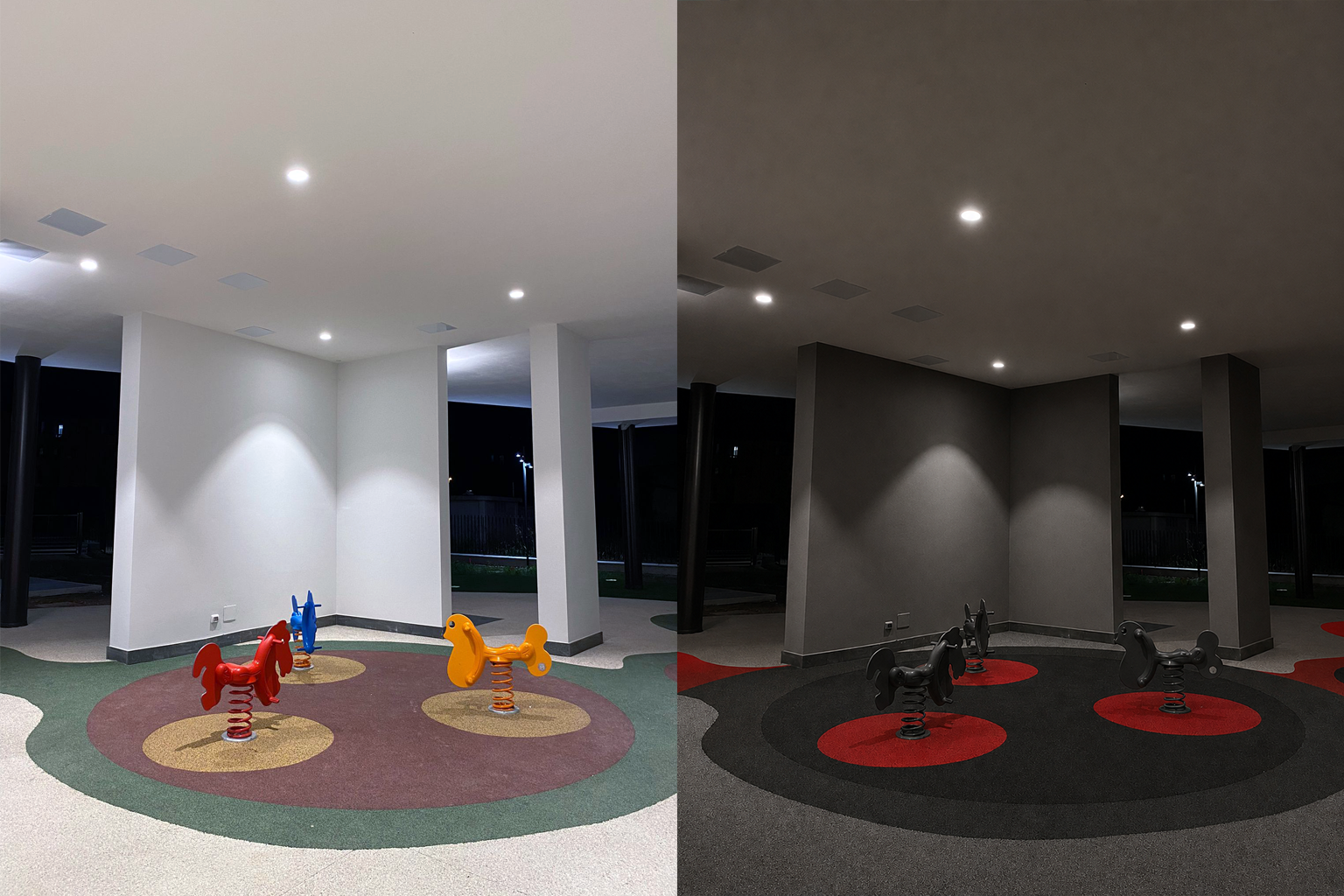
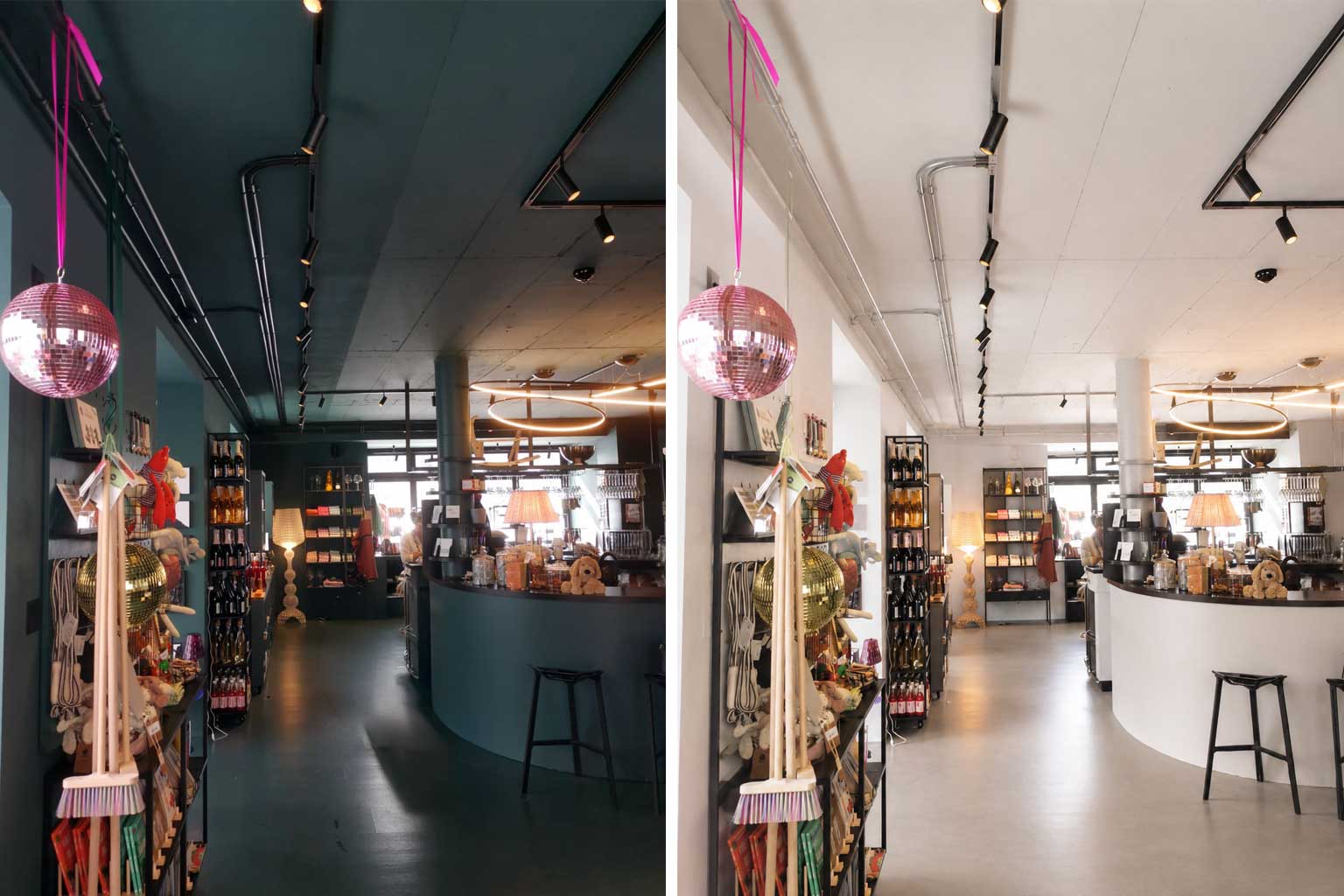
Environments that are too dark, or dominated by low-reflectance surfaces, can distort visual perception and generate a sense of compression. A clear example is spaces designed for children: dark walls and grey floors contradict the function of the environment, because light quality and colour directly affect well-being, attention and daily experience. This is the central question of every project: light is built around the person who inhabits the space, before it is ever a technical or aesthetic matter.
Understanding daylight allows the artificial system to be properly dimensioned, maintaining continuity and visual stability across changing conditions. Artificial light does not replace daylight. It complements it.
Layout, Simulation and Photometric Data
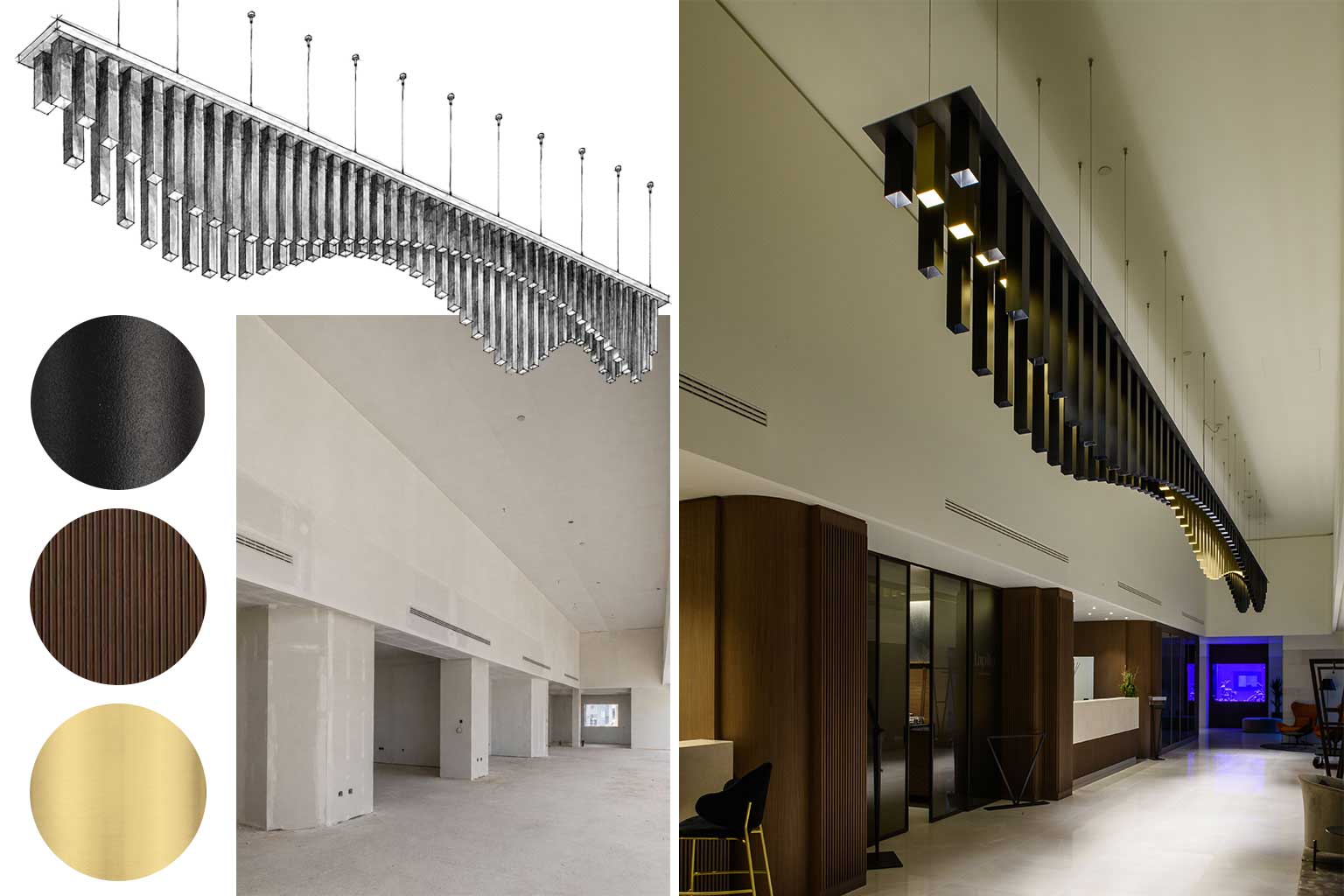
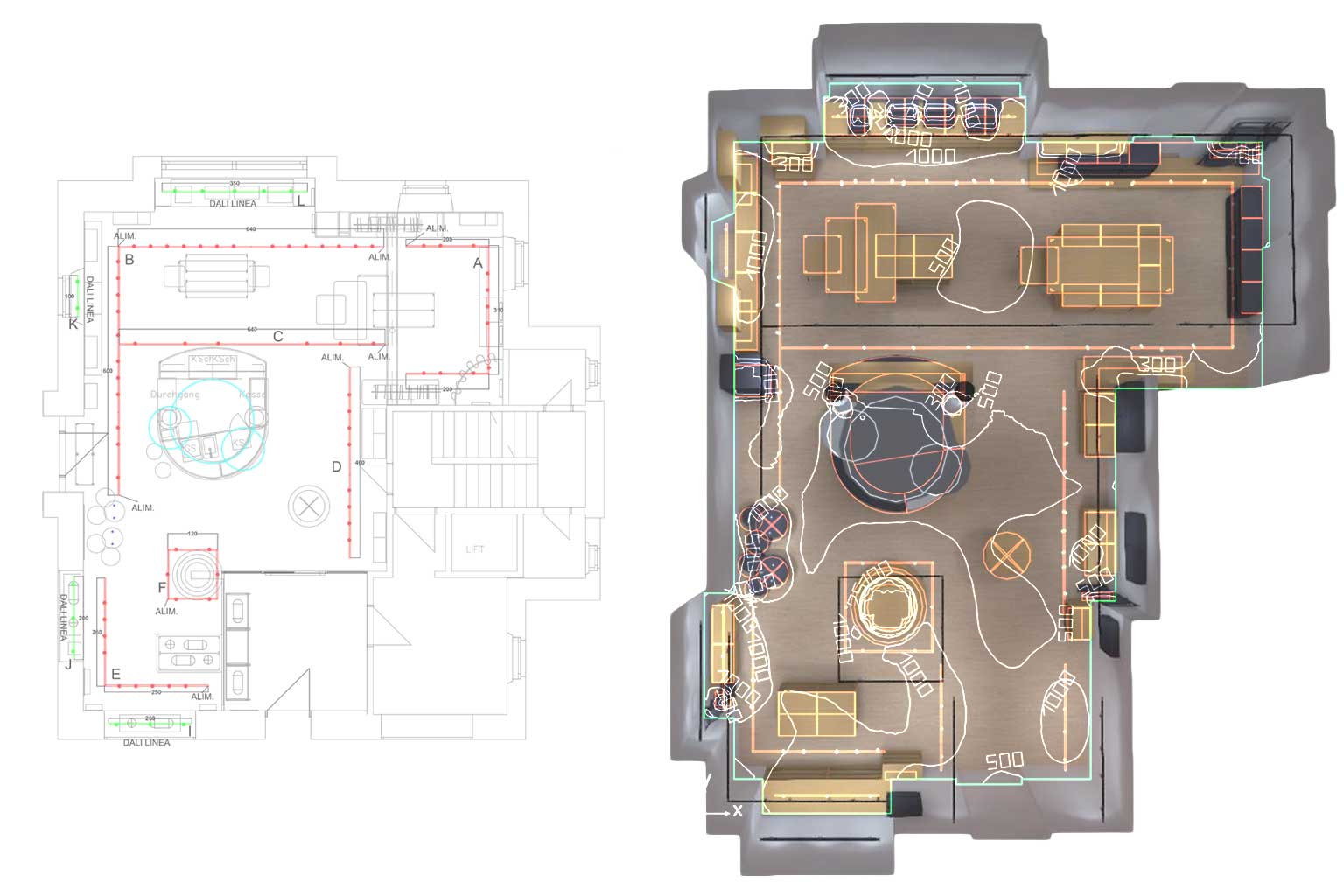
Only after this analytical phase does the lighting design take shape. The layout is not a formal choice, but the result of a synthesis between spatial geometry, materials, function and daylight conditions. Luminaire positioning defines hierarchies, relationships between direct and diffuse light, and coherence with the architecture.
Within the same space, different functions can coexist, requiring specific levels and types of illumination. Dynamic lighting control systems can manage human-centric lighting scenarios, modulating intensity, colour temperature and light distribution according to activities and times of occupancy.
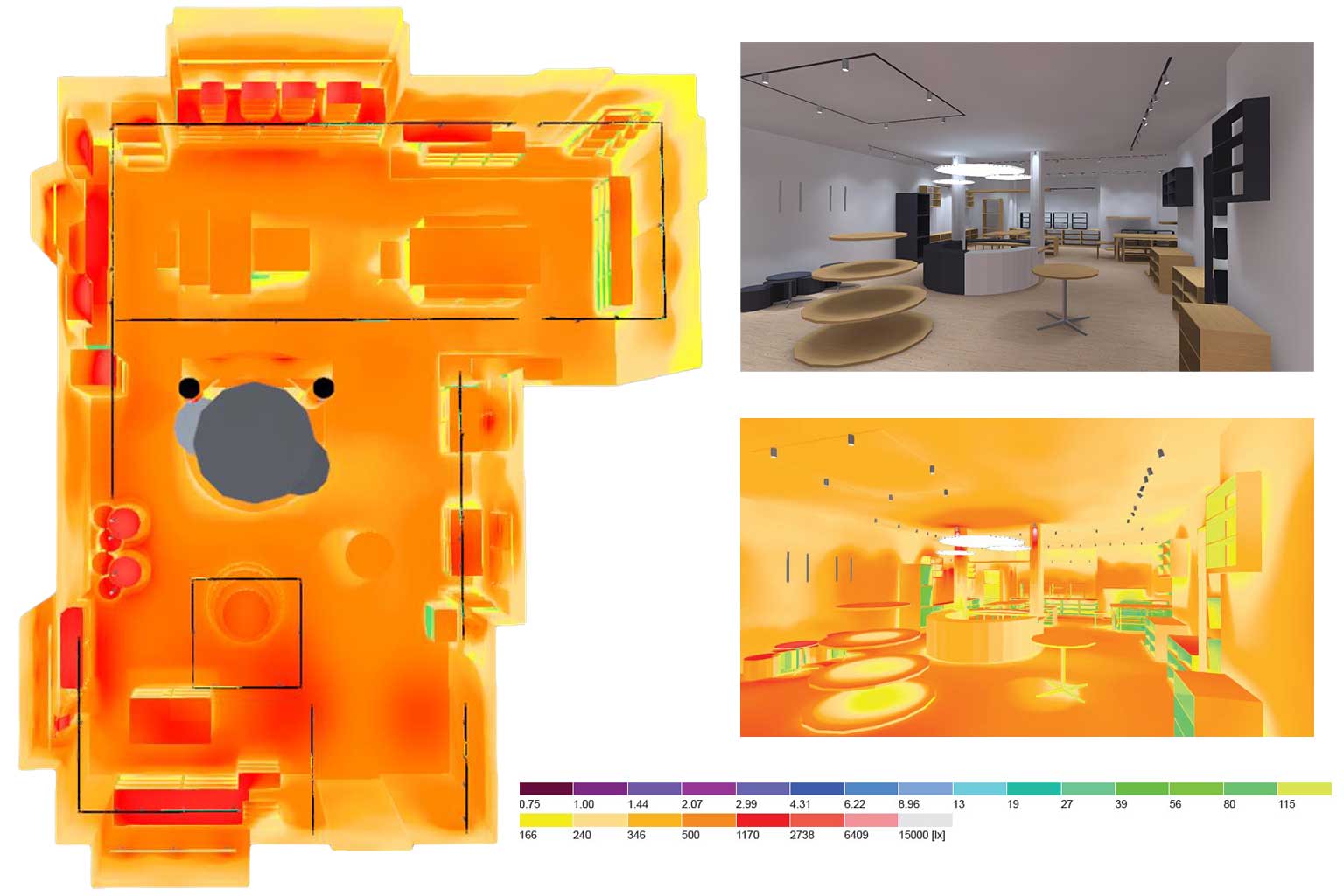
At this stage, photometric data become essential. Photometric files, such as LDT formats, describe the actual behaviour of luminaires and allow for accurate simulations of distribution, uniformity and luminance balance. Continuous product evolution requires constant updates to ensure alignment between simulation and real performance. Integrating updated photometric data into the design process improves precision, strengthens control and reduces discrepancies during execution.
Colour also plays a determining role. Variations in tone on walls, floors or claddings change reflectance values and alter light behaviour. An apparently formal modification can render the calculation inconsistent with reality. Surfaces are not decorative elements: they are project data in their own right.
Concept, Calculation, Construction
The process unfolds as a continuous sequence. Spatial analysis, lighting calculation, layout development and simulation each contribute to building a coherent system. Each phase reinforces the next, ensuring consistency between concept, development and execution.
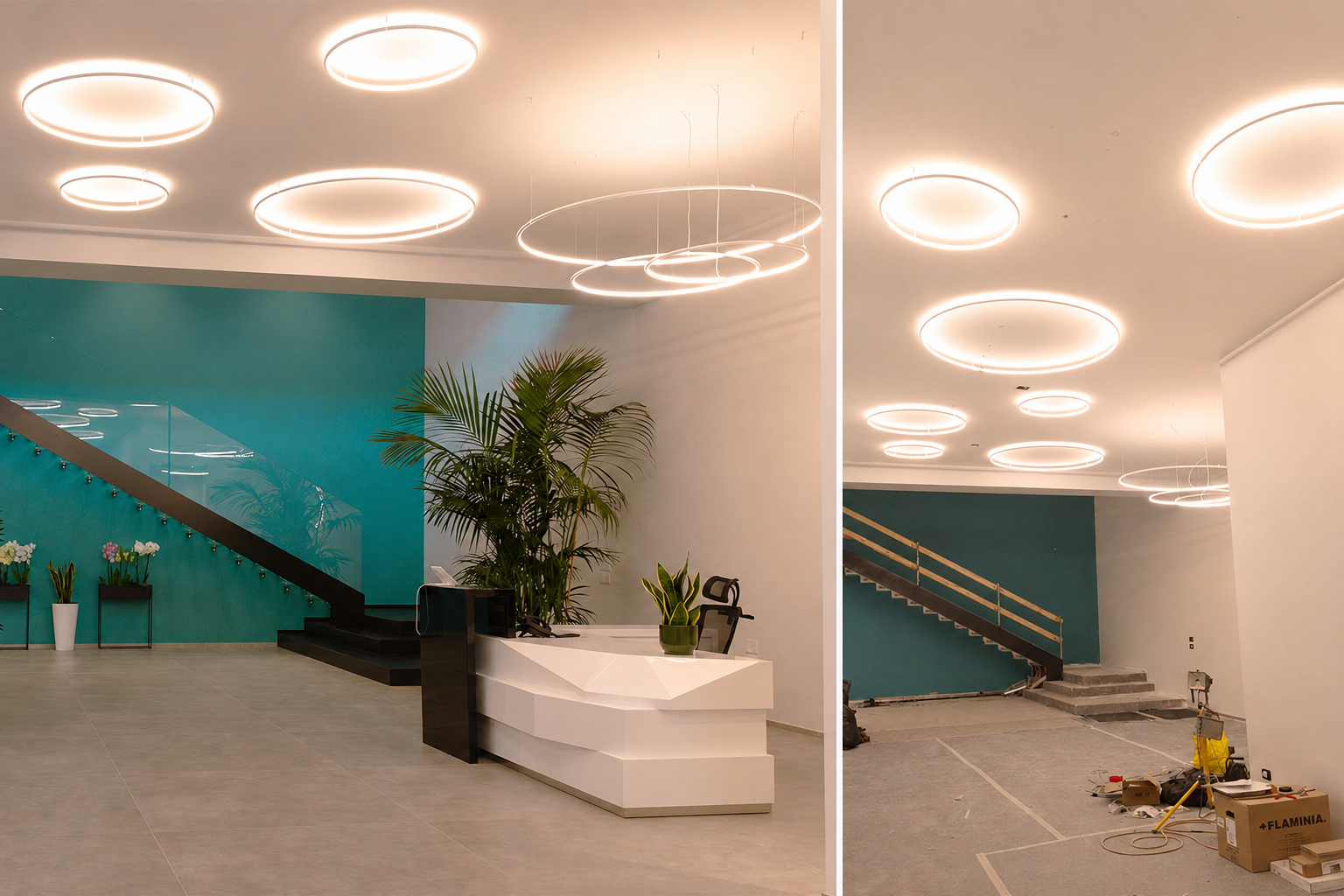
It is during the execution phase that the project is truly tested. The correct positioning of drivers, the compatibility of dimming systems, the precision of luminaire installation and the quality of cabling are not secondary aspects. They are integral parts of the design. In suspended or low-voltage systems, every technical detail directly affects reliability and performance.
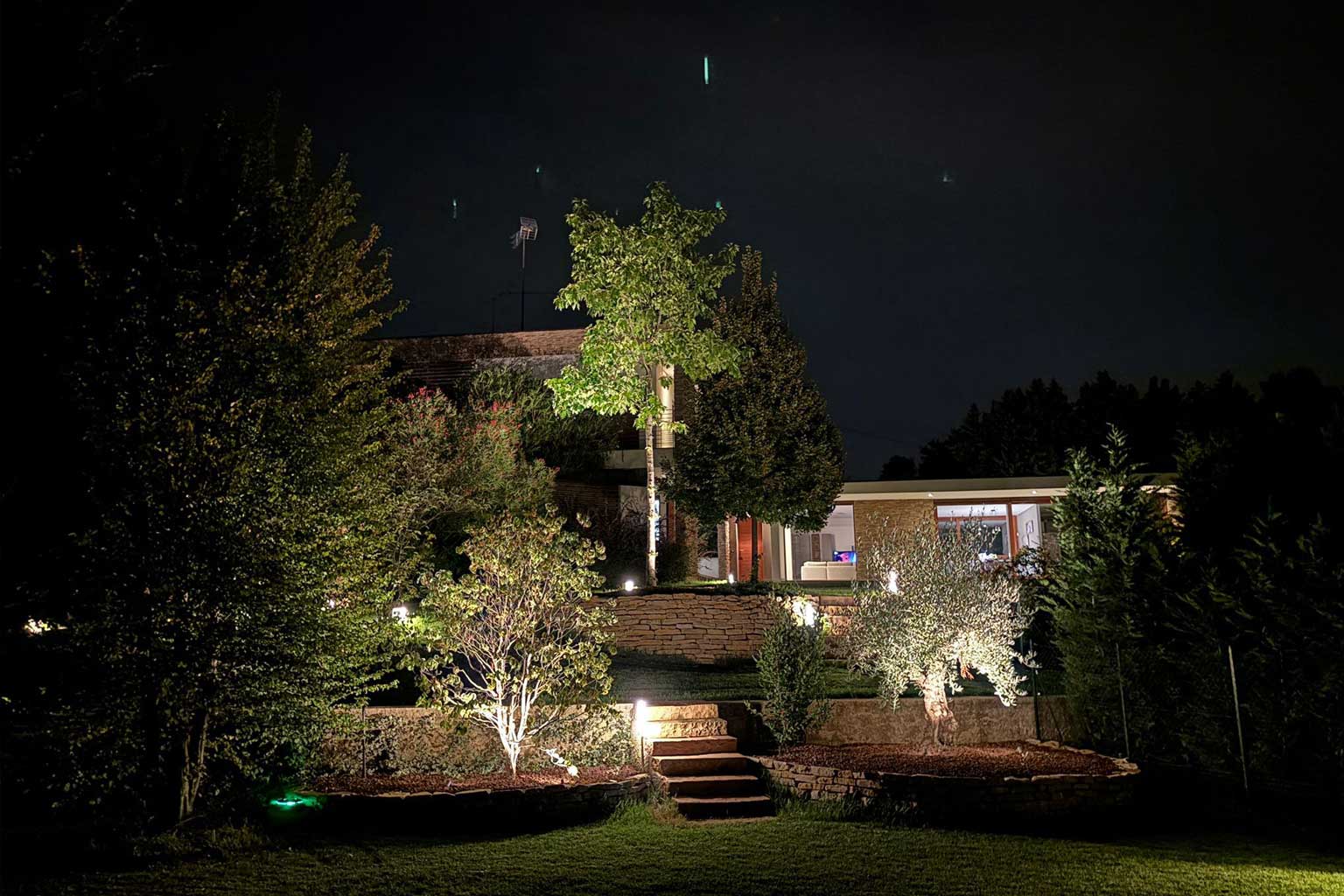
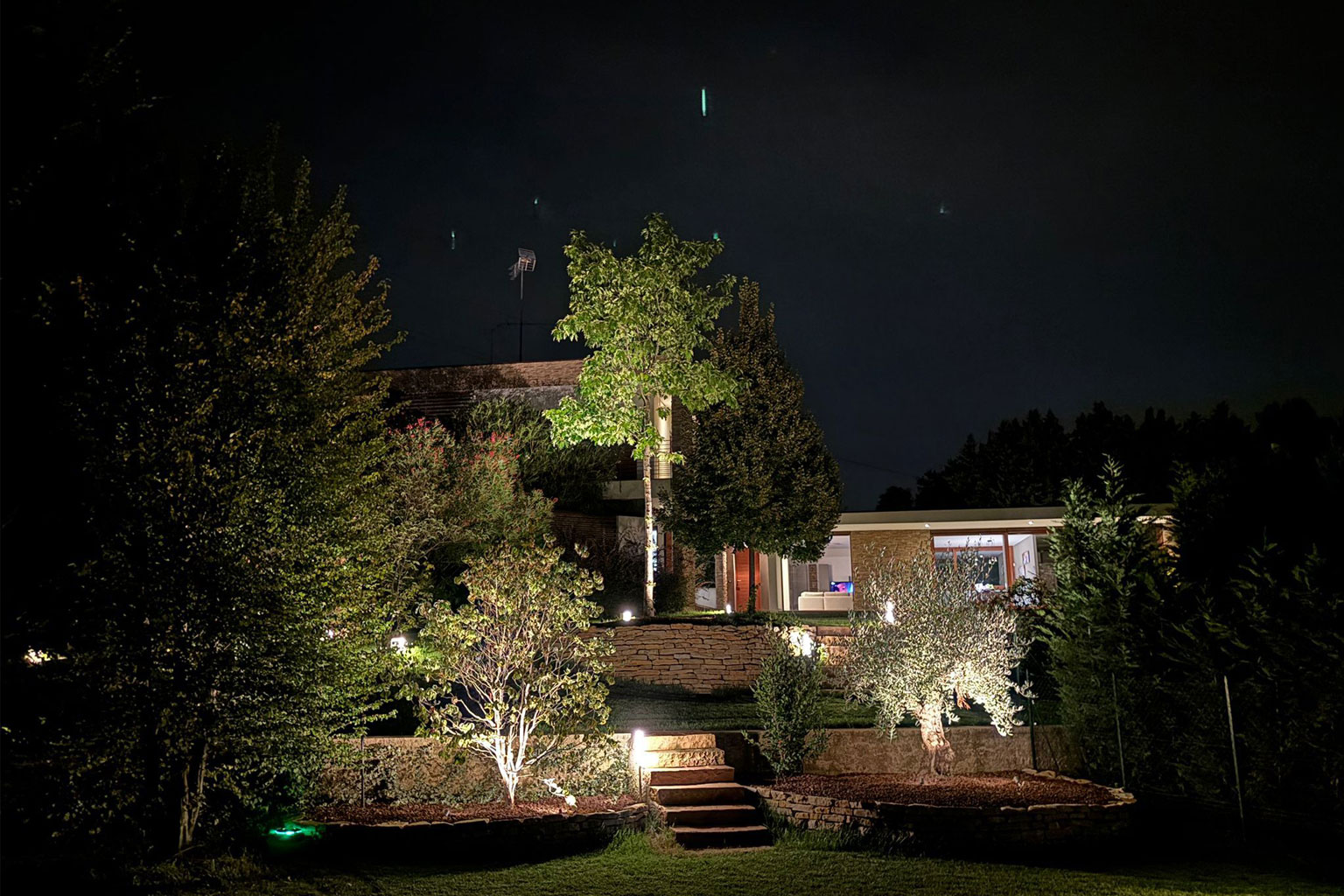
This rigour becomes even more critical in outdoor projects, where installation conditions are less controllable. Longer cable runs can generate voltage drops, while vegetation, level changes and environmental obstacles make it harder to predict the distribution of luminous flux. Designing an outdoor lighting system requires strict coordination between technical choices, fixture positioning and installation quality, to ensure consistent performance in any condition of use.
Execution quality does not conclude the project. It completes it.
Designing with light means reading space, interpreting its requirements and translating them into a coherent system. In this balance, light and shadow are not opposites, but complementary elements of a single language. Their relationship builds depth, hierarchies and visual rhythms, redefining surfaces and architectural geometries where what is illuminated and what remains in shadow both contribute to giving shape to space.